
Most people assume a cushion cover is the easy one. It is small, it unzips, and the care label often allows a cool wash. Yet cushion covers are usually the most saturated, most printed and most mixed-fibre textiles in the room. The pile of faded, water-marked covers at the back of the cupboard shows how the cool wash went. For cushion cover cleaning in Sydney, Luxe takes a whole room’s covers in one collection. We clean each to its fibre and return them ready to dress the sofa again.
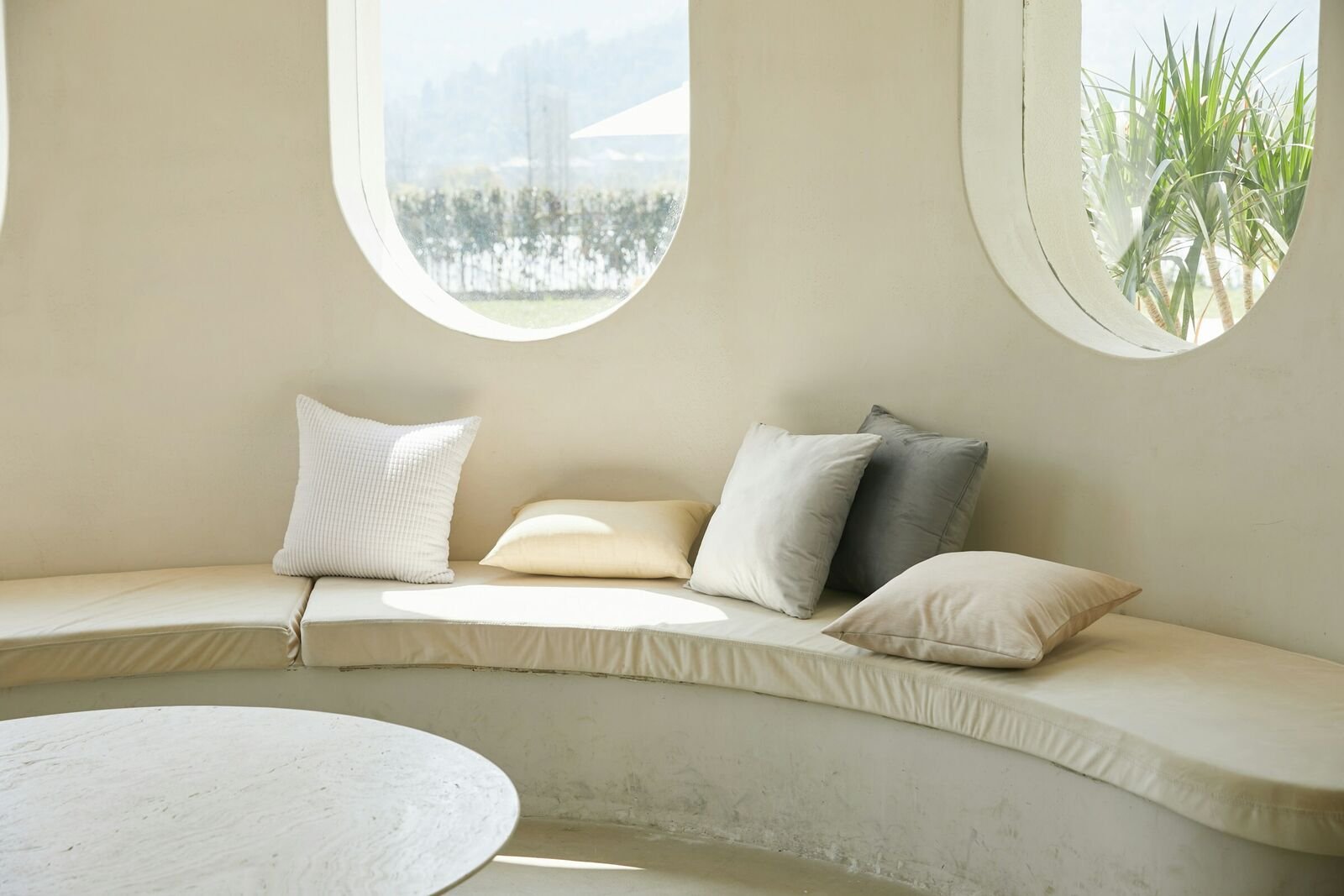
The covers on the sofa are what guests sit against all summer. Book a collection for the whole room before the entertaining season begins.
Why cushion covers fail in a domestic wash
A printed cover carries its pattern on the surface. Many prints, pigment prints especially, sit on the fibre rather than in it. So warm water with agitation lifts loose dye and carries it into the pale ground and the contrast piping. Saturated plain dyes do the same: a saffron linen cover can bleed into its ivory back panel the first time it gets wet. Velvet fails differently. The pile lies flat where it rests wet against itself and dries that way, leaving a bruise-like patch that brushing alone rarely lifts. Silk water-marks. Moisture moves the dye and the finish and leaves a tide line where it dried, and agitation dulls the lustre.
The cost is high because a cushion cover is rarely replaceable. Someone chose the fabric to sit with the sofa, the curtains and the rug. By the time a cover is ruined, the mill has often discontinued the fabric. So the cleaning has to be right the first time.
Scatter, seat, back and outdoor: four kinds of soil
The soil differs by where the cushion lives, and so does the right treatment. In a Woollahra sitting room the scatter cushions take hair products and fragrance. The seat covers take body oils and food, and the backs take whatever a head leaves behind. On a Darling Point terrace, meanwhile, the outdoor set takes sunscreen, salt air, pollen and the first grey of mould after a wet week.
- Scatter cushions. Silk, velvet, embroidered and printed covers with the most delicate fibres and the highest risk of dye movement.
- Seat covers. Linen and cotton that take food, wine and pets, and shrink in a wash, so they no longer close over the insert.
- Back covers. Hair oils and hand contact along the top edge, and a sun-faded panel on the side that faces the window.
- Outdoor covers. Robust solution-dyed face fabric, but cotton piping, zips and thread that are not, and mould spores that need treating rather than rinsing.
How Luxe approaches cushion cover cleaning in Sydney
We inspect every cover under colour-correct lighting, including seams, zips and piping. We also test the dye on a hidden edge before any treatment. Then each one goes into a fibre-specific programme: linen, cotton, velvet, chenille, wool, silk or performance blends. For anything that bleeds, crushes or water-marks, that means our eco-friendly solvent, which is perc-free and biodegradable and carries no water into the fibre. We map and pre-treat stains individually, from red wine and makeup to sunscreen and pet marks. The process is shrink-controlled and colour-protected, and covers run on dedicated equipment rather than crowded in with other items. For wool and wool-blend covers we follow the fibre’s own rules. Woolmark’s care guidance sets out the basics: dry wool away from direct heat and always use steam when pressing it.
Finishing is where the difference shows. We finish velvet pile-up without pressure to bring the surface up evenly, and silk with a light hand to guard against shine and water marks. The aim is prints crisp at the edges and piping lying flat. If a cover arrives already crushed, faded or water-marked, we tell you what is likely to improve before we begin. Our couch cover and cushion cleaning service describes the method in full. Our note on preventing colour bleeding and water marks also explains why the dye test comes first. With guests due before Christmas, book the collection now and we test every cover before work begins.
What about the inserts?
We can clean feather and down inserts too, and after a few years most of them need it. Body oils and dust mites collect in the fill, the loft drops and the cushion sits flat. We clean them as part of our bedding work, in the same way we handle doonas and quilts. Fill-specific chemistry and temperature-controlled drying help the loft return. Send the insert and the cover together, and we clean them separately and return them as a pair.
Polyester fibre inserts are a different matter. Once they have flattened, replacing them usually gives a better result than cleaning. Foam, memory foam and latex inserts are not something we clean.
Cushion cover cleaning in Sydney: one collection for the whole room
Unzip every cushion cover in the room, from the sofa seats and backs to the scatter cushions, the bed cushions and the outdoor set. Fold them into one bag with any throw or bolster, and book a collection. If the sofa or armchairs wear loose covers, add those to the same bag. Our driver collects from your door, anywhere from Double Bay to Potts Point, or from your building’s concierge. Standard turnaround is three to five days. Quick adds 25 per cent, Rush adds 100 per cent, and same-day is subject to availability, so book it and we confirm.
Early summer is the moment to send them. In a Sydney summer, salt air and sun work on every cushion cover in the house, so cleaning now pays off. The covers come back before the first long lunch. Because everything is cleaned at once, the colours sit together across the room. Pickup and delivery is $25 flat, whether the bag holds four covers or forty. For households that send suits and shirts out most weeks, a Luxe membership sets a standing weekly or fortnightly collection.
Your Questions, Answered
Can printed cushion covers be cleaned without the colours running?
Usually, yes, because we keep them out of water. We test the dye on a hidden edge first, then clean printed and saturated covers in eco-friendly solvent. It carries no water into the fibre and so is far less likely to move the dye. If the test shows a dye that will move under any method, we tell you before we do anything.
Will velvet cushion covers come back crushed?
Our process is designed to avoid it. We clean velvet in a fibre-specific programme and finish it pile-up without pressure, so the surface reads evenly. A cover already crushed in a domestic wash can often improve, but not always fully. We assess each piece and tell you what to expect before we begin.
Can you clean the cushion inserts as well as the covers?
Feather and down inserts, yes. We clean them with fill-specific chemistry and controlled drying that helps the loft return, and send them back with their covers. Polyester inserts are usually better replaced once flat, and we do not clean foam, memory foam or latex inserts.
How long does cushion cover cleaning take in Sydney?
Standard turnaround is three to five days from collection. If guests are due sooner, choose Quick or Rush at booking, or ask for same-day, which we confirm when you book. Most households send every cover in the room together, so the colours come back as a set.
Luxe offers cushion cover cleaning across Sydney, collecting covers, inserts and throws from Double Bay, Woollahra, Paddington and Darling Point, then cleaning each to its fibre and returning the whole room together. Book online or call 0485 511 744. Pickup and delivery, $25 flat.