
As Sydney tips from winter into spring, one of the first household rituals is swapping the heavy winter doona for something lighter. The thick down or wool-filled quilt that kept you warm through July gets folded up and pushed to the top of the wardrobe or into an under-bed box, where it will sit until next May. It is such a routine act that almost nobody stops to think about the single most important step: doona cleaning before storage. Having the doona collected and cleaned as you make the swap is a once-a-year job that protects it all summer.
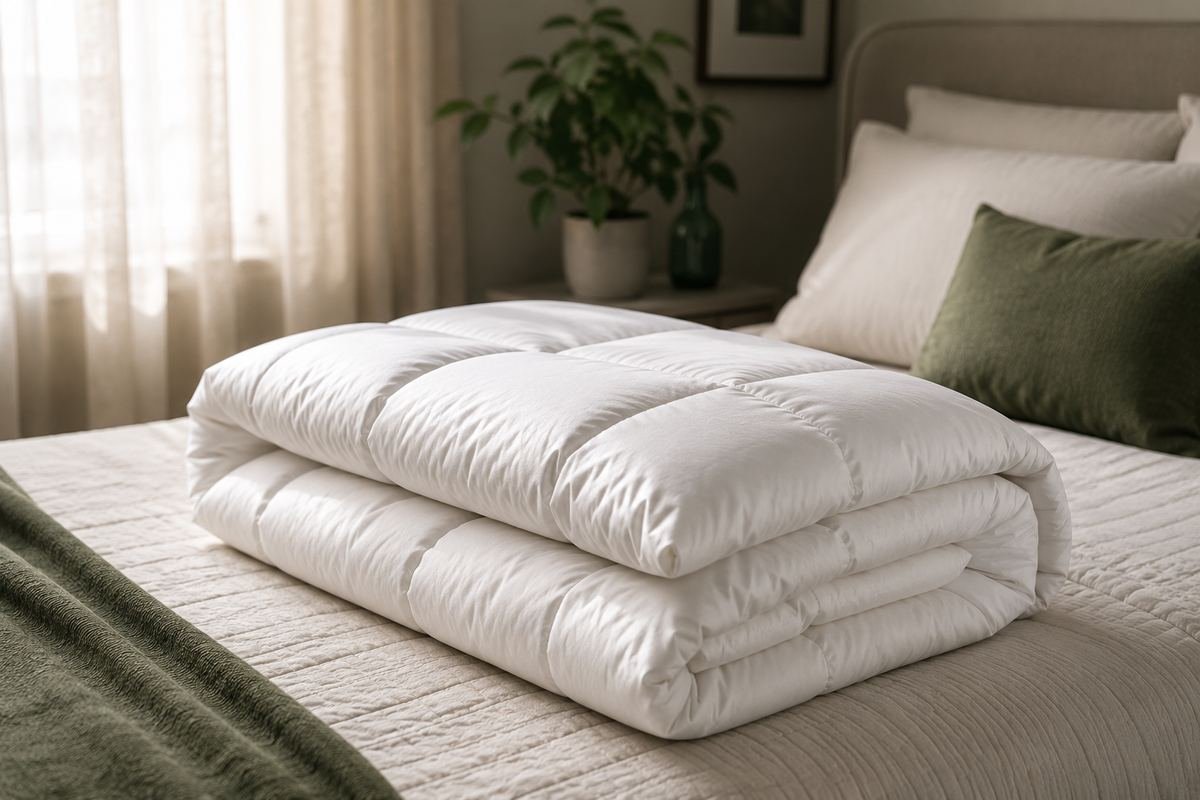
The Seasonal Swap Most People Get Wrong
A doona that has been slept under all winter is far from clean, even if it looks fine. Over a season it absorbs a surprising volume of body moisture, perspiration, skin cells and oils, along with dust and the fine debris that dust mites feed on. Sealing all of that away for six warm months is precisely the wrong thing to do, and it is why so many people pull out a doona in autumn to find it yellowed, musty or lifeless.
The reason it slips past most households is that a doona spends its whole life inside a cover. Because the cover is washed regularly, people assume the doona itself stays clean — but moisture and oils pass straight through the cover into the filling, night after night, all winter. The cover protects against the obvious, not the invisible, and it is the invisible that causes the damage.
What Actually Happens to a Stored, Unwashed Doona
The human body loses a considerable amount of moisture every night, and much of it passes into the bedding. Fillings — particularly natural down and wool — hold that moisture and the body oils that come with it. When a doona is stored without cleaning, several things happen over the warmer months.
- Trapped oils oxidise and cause yellowing, especially visible around the areas that sat closest to the body.
- Residual moisture in a sealed environment encourages mould and that unmistakable musty smell.
- Dust mites — which thrive on skin cells and humidity — continue to populate the filling, a genuine concern for anyone with allergies or asthma.
- Down loses loft and wool compresses and mats, so the quilt emerges thinner, flatter and less warm than it went in.
There is a hygiene dimension worth stating plainly. Bedding is one of the most intimate textiles we own, in contact with skin for eight hours a night across an entire season. A doona that is cleaned at the end of winter is not just better preserved; it is genuinely more hygienic to sleep under when it comes back into use, free of a season’s accumulated allergens and residues.
Why Doonas Need Specialist Cleaning
Doonas and quilts are among the trickiest items to clean well, which is why so many are simply never washed. A domestic machine is usually too small to allow a doona to move freely, so it never truly cleans and, worse, never fully rinses or dries. A down doona that is not dried thoroughly and correctly will clump, develop internal mould, and smell — a common and heartbreaking outcome of a home attempt.
Different fillings demand different handling. Down and feather require gentle cleaning and, critically, a careful drying process that restores loft rather than destroying it. Wool-filled quilts must be handled to avoid felting and compression. Silk-filled doonas are especially delicate and intolerant of aggressive washing. Getting this wrong can permanently ruin an expensive item, whereas correct specialist cleaning leaves it fresh, lofted and hygienic.
At Luxe, quilts and doonas are cleaned according to their filling and construction, then properly dried and finished so they regain their plumpness. The result is bedding that is genuinely clean through to the core, free of the oils and allergens a winter has deposited, and ready to be stored safely.
It is worth being honest about why drying is the step that makes or breaks the job. A doona is thick, and moisture hides deep in the core where it is slow to escape. A specialist drying process works the filling so that every part reaches dryness and the down or wool re-lofts evenly, whereas a home dryer tends to leave the outer layers dry and the centre damp — precisely the hidden pocket of moisture that turns into mould and odour once the doona is folded and sealed away for the season.
How to Store a Doona So It Survives the Warm Months
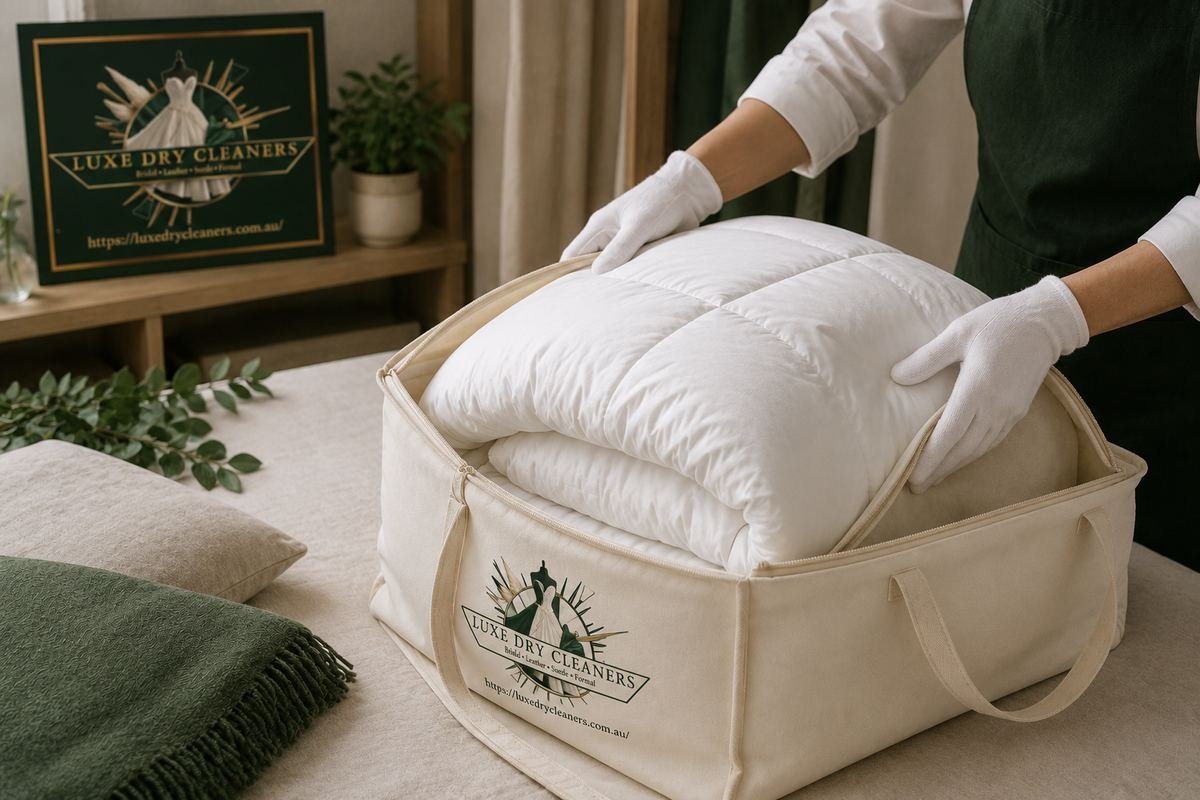
Cleaning is only half the job; storage matters just as much. The cardinal rule is to let a doona breathe. Vacuum-sealing bags, so tempting for saving space, are one of the worst things you can do to a natural-filled quilt — they crush the loft flat and can force any residual moisture into the fibres, encouraging mildew. Down and wool need air.
- Store a clean, thoroughly dry doona in a breathable cotton bag, loosely folded rather than tightly compressed.
- Choose a cool, dry, well-ventilated spot away from direct sunlight — a linen cupboard on an internal wall is ideal.
- Avoid the tops of wardrobes that back onto bathrooms or external walls, which trap the most humidity over a warm Sydney summer.
- A moisture absorber nearby adds insurance in homes close to the coast.
Do this once, properly, and the doona you unpack next autumn will smell fresh and feel as warm and full as the day you stored it — no yellowing, no mustiness, no unwelcome surprises on the first cold night.
One Job, Once a Year
The beauty of end-of-winter doona care is that it is genuinely a once-a-year task. Clean it as you pack it away, store it correctly, and you can forget about it until the seasons turn again. It protects an item that is expensive to replace, safeguards the health of everyone who sleeps under it, and removes the last-minute panic of discovering a mouldy quilt on the first chilly evening.
It is also worth extending the same thinking to the other bedding that has done winter service — the wool mattress topper, the heavier blankets and throws, the spare doona in the guest room. All of it benefits from the same end-of-season clean before it is stored, and all of it suffers the same yellowing and mustiness if it is not.
Our pickup and delivery service makes it effortless — bulky bedding is exactly the sort of thing that is a nuisance to transport, so we collect it from your door and return it cleaned, lofted and storage-ready across the Lower North Shore, Eastern Suburbs and greater Sydney.
Frequently Asked Questions
Do doonas really need professional cleaning?
Yes — domestic machines are too small to clean or, critically, dry a doona properly. Down that stays damp at the core clumps, moulds and smells. Specialist cleaning and controlled drying restore loft and leave it clean through to the filling.
How often should a doona or quilt be cleaned?
Once a year, ideally at the end of winter before storage, so a season of body moisture, oils and dust-mite allergens isn’t sealed in over the warm months.
How should I store a doona over summer in Sydney?
Clean and bone dry, loosely folded in a breathable cotton bag, in a cool spot on an internal wall. Never vacuum-sealed — compression ruins natural loft and traps moisture.
Bulky bedding is exactly what pickup and delivery is for. Across Vaucluse, Rose Bay and Bellevue Hill and our 58 Sydney suburbs, we collect doonas, quilts and toppers from your door and return them cleaned, re-lofted and storage-ready. Standard turnaround is 3–5 days, with express options on request. Book a pickup online or call 0485 511 744.