
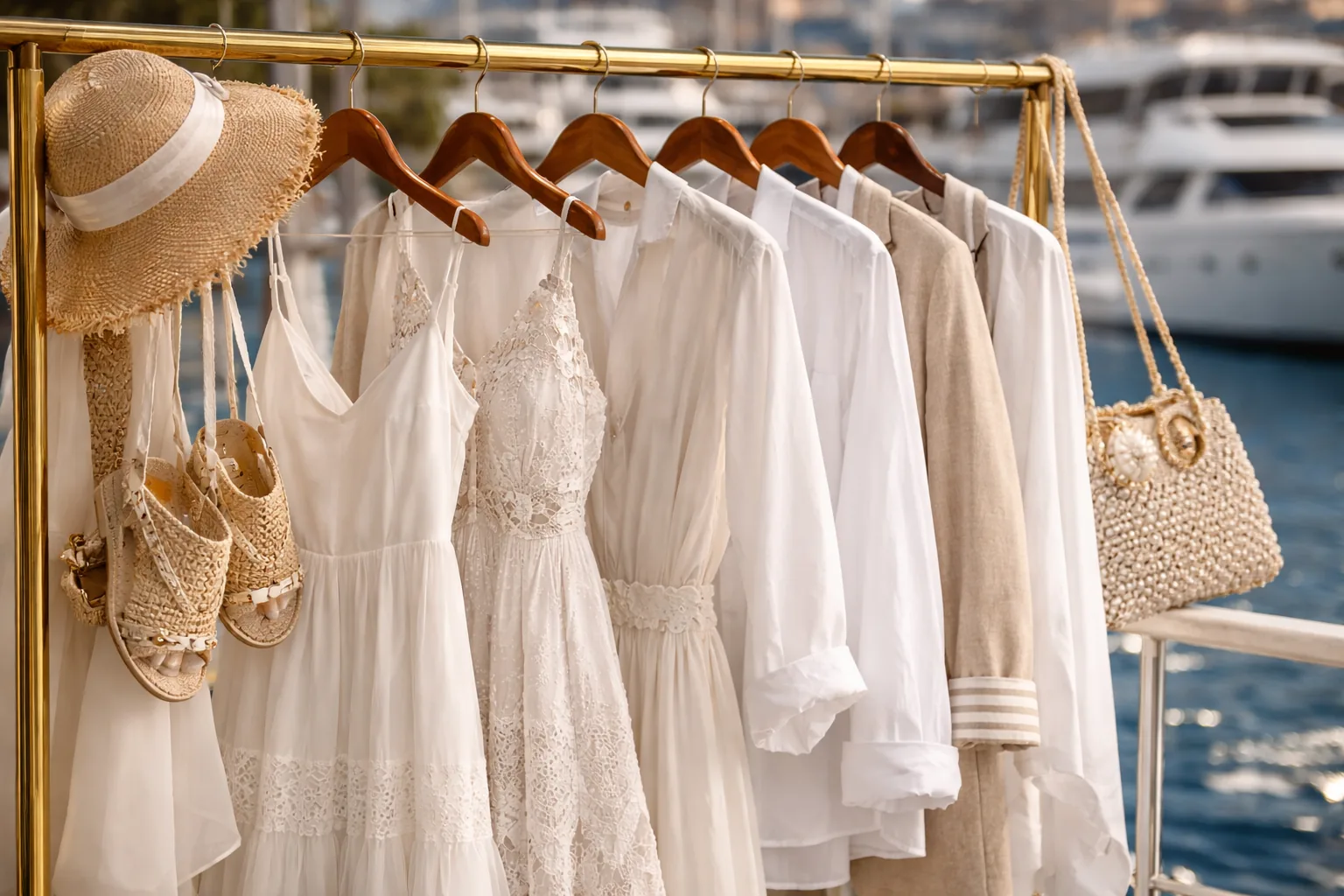
Yacht parties evoke effortless glamour — crisp white linens, flowing silks, tailored resort wear, and perfectly styled looks against open water and sunlit decks. Behind the aesthetic, however, lies one of the most punishing environments luxury garments can encounter.
Why Yachts Are Uniquely Harsh on Clothing
Salt air, intense UV exposure, sunscreen, humidity, and confined onboard storage create a perfect storm of garment risk. Damage sustained at sea is often invisible at first, only revealing itself weeks later through yellowing, fibre weakness, lingering odour, or permanent staining.
For stylists, personal assistants, and wardrobe managers in Sydney, understanding how yacht environments affect clothing is essential to protecting high-value wardrobes and avoiding irreversible damage.
Unlike land-based events, yachts introduce environmental factors that cannot be fully controlled. Even garments that never touch seawater are continuously exposed to:
These conditions accelerate fibre degradation and staining. Garments may look pristine during the trip while damage quietly develops beneath the surface.
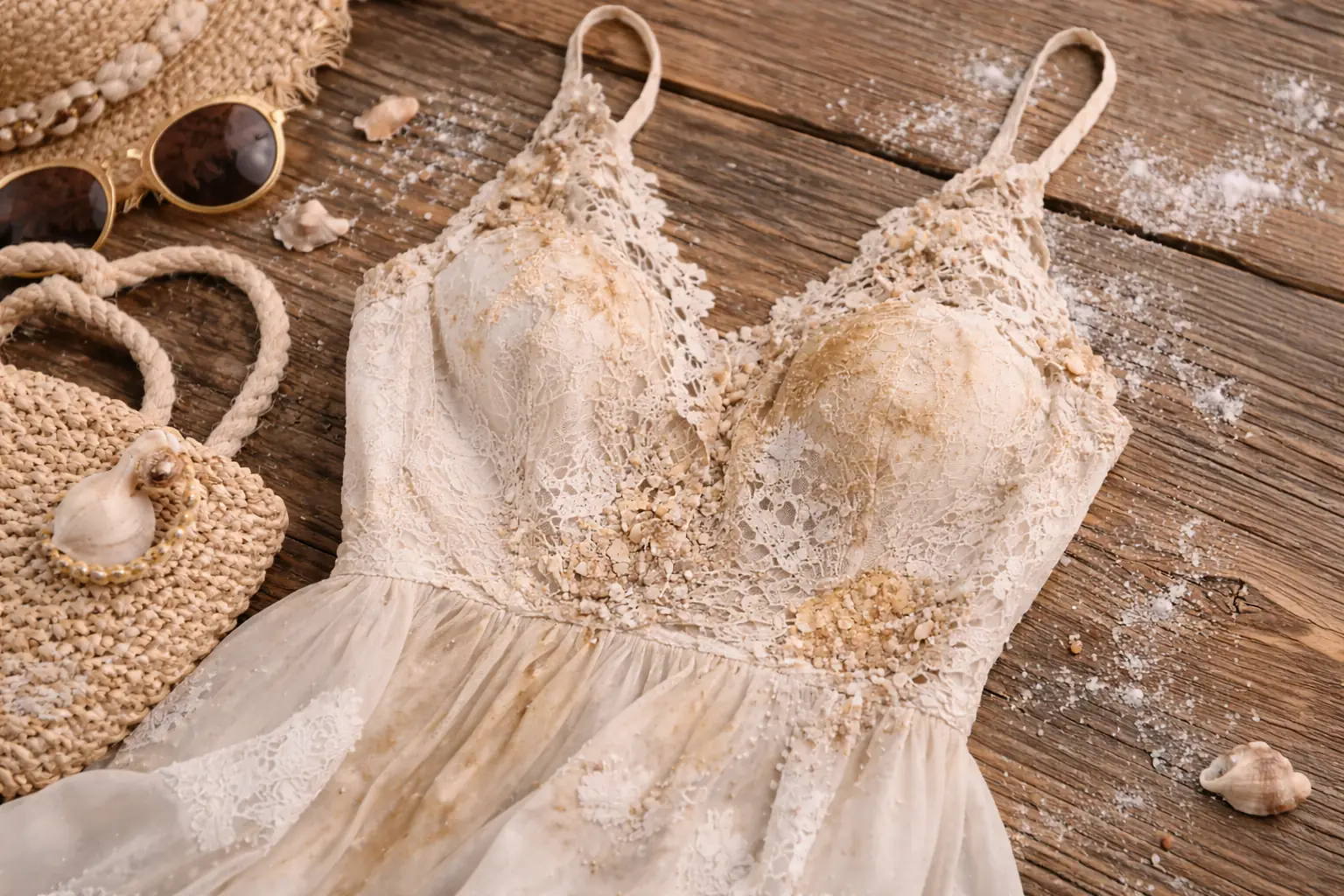
The Most Vulnerable Fabrics at Sea
Yacht wardrobes prioritise breathable, lightweight fabrics suited to warm climates, including:
While elegant and comfortable, these fibres are especially sensitive to salt, sun, and moisture, making them high-risk in marine environments.
The Hidden Dangers of Salt Exposure
Salt Air & Fibre Breakdown
Microscopic salt crystals settle invisibly on fabric surfaces. As humidity rises and falls, these crystals attract and release moisture repeatedly. Over time, this weakens fibres — particularly silk, wool, and viscose — leading to:
Salt as a Stain Accelerator
Salt also acts as a catalyst, bonding and intensifying stains from sweat, body oils, sunscreen, and sea spray. Once salt interacts with these substances, stain removal becomes significantly more complex and risky.
Sunlight: The Silent Colour Thief
UV exposure is intensified at sea due to reflection from water and light-coloured decks. Even short periods in direct sunlight can cause:
Damage is often uneven, appearing first on shoulders, folds, hems, and exposed seams. Natural fibres and darker dyes are especially susceptible.
Sunscreen, Oils & Yacht-Specific Stains
Sunscreen is among the most challenging contaminants in luxury garment care. Most formulas contain oils, UV stabilisers, and metallic compounds. Combined with heat, salt, and time, these ingredients oxidise — producing yellow or orange stains, particularly on white, silk, and linen garments.
A piece worth protecting deserves a specialist.
Our Sydney couture and designer team handle it end-to-end — inspection, individual cleaning, hand-finishing, and door-to-door delivery.
Why Yacht Stains Often Appear After the Trip
Clients are often surprised when garments look flawless onboard but develop stains weeks later. This delayed damage occurs because:
Without prompt professional treatment, these chemical reactions can become permanent.
Common Onboard Mistakes That Increase Damage
Well-intentioned onboard care can worsen damage, including:
These actions trap moisture, drive salt deeper into fibres, and accelerate deterioration.
How Luxe Dry Cleaners Protects Yacht Wardrobes in Sydney
At Luxe Dry Cleaners Sydney, garments worn at sea are treated as environmentally compromised pieces, not simply “worn clothing”.
Yacht-Specific Assessment
We assess risks beyond visible staining, including salt exposure level, UV stress indicators, sunscreen and oil contamination, and humidity-related fibre fatigue.
Immediate Post-Event Evaluation
Yacht-exposed garments are prioritised for early evaluation. Delays allow oxidation and salt crystallisation to progress, dramatically increasing the risk of permanent damage.
Low-Impact, Salt-Conscious Cleaning
Marine-exposed garments require carefully controlled moisture introduction, salt-neutralising techniques, minimal mechanical agitation, and extended low-temperature drying.
Fibre Recovery & Stabilisation
After cleaning, garments are rested to rehydrate evenly, regain elasticity, and release residual salt and moisture — a critical phase for preserving colour, structure, and longevity.
Best Practices for Stylists & PAs on Yachts
Prevention significantly reduces long-term risk.
Book Your Pickup
Luxury Dry Cleaning, Collected From Your Door
Complimentary collection and delivery across Sydney CBD, the Eastern Suburbs (Double Bay, Woollahra, Paddington, Bondi, Bellevue Hill, Darling Point) and the Lower North Shore (Mosman, Neutral Bay, Cremorne, Kirribilli). Every piece inspected and hand-finished by specialists.
Prefer to talk first? Speak with a specialist ›
Frequently Asked Questions
Yes. Salt particles in the air settle on fabrics and cause gradual fibre damage.
Oxidation occurs over time, especially when heat and salt are involved.
Linen is breathable but highly absorbent and vulnerable to salt and oils.
No. Rinsing often sets stains and spreads salt deeper into fibres.
As soon as possible after wear to prevent oxidation and fibre breakdown.
Early intervention prevents irreversible damage and preserves long-term value.
Luxe Dry Cleaners is Sydney’s couture and luxury garment care specialist, servicing the CBD, Eastern Suburbs, and Lower North Shore with complimentary door-to-door collection and hand-finished quality. Further reading on fabric care: Woolmark care guidelines.