
By the tail end of August, most Sydney wardrobes have quietly endured three months of exactly the conditions mould loves: cool air, closed doors, and moisture that never fully clears. Our winters are rarely bitterly cold, but they are damp. Coastal humidity, heavy rain across the Eastern Suburbs and Lower North Shore, condensation on windows, and the habit of drying washing indoors all conspire to push the moisture content of the air inside a closed wardrobe far higher than most people realise. If a musty note has already crept into yours, booking a collection early is the difference between a simple refresh and a rescue — mould on clothes rewards early action.
Why Sydney Winters Are a Hidden Threat to Fine Fabrics
Mould spores are always present in the air. They do not need much to take hold — a relative humidity above roughly sixty per cent, still air, a little warmth, and an organic surface to feed on. A wool coat, a silk blouse, a cashmere jumper or a leather jacket is, from a mould spore’s point of view, a banquet. Natural fibres are hygroscopic, meaning they absorb and hold water from the surrounding air, so a garment can feel dry to the touch while carrying enough internal moisture to support growth.
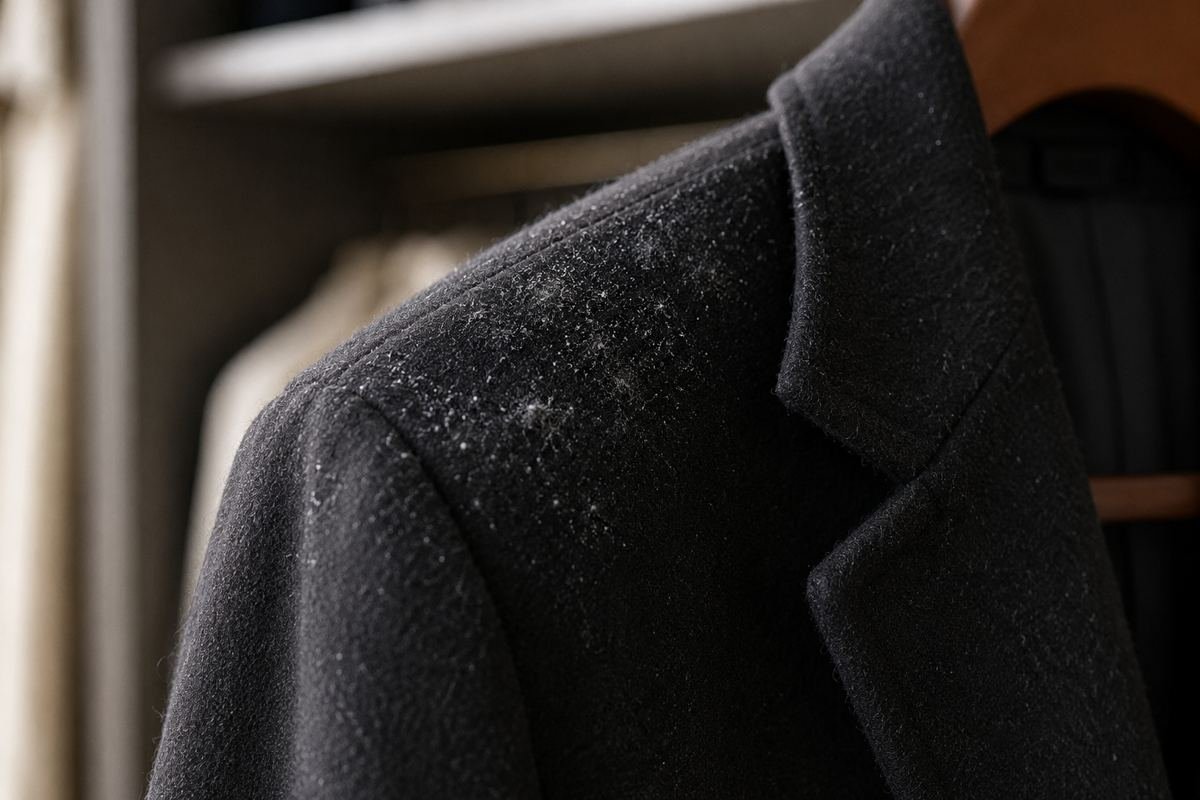
The result is the faint, musty smell that greets you when you open a rarely used section of the wardrobe in early spring, or the powdery grey-white bloom you notice on the shoulders of a dark coat you have not worn since June. That bloom is not dust. It is a living colony, and left alone it will spread, stain, and eventually weaken the fibres it feeds on.
What makes this such a Sydney-specific problem is our habit of treating winter as mild. In genuinely cold climates, homes are heated hard and dry; here, we tend to shut windows against the rain and let humidity build indoors, which is precisely the environment mould prefers. Homes near the harbour or the coast, apartments with limited cross-ventilation, and built-in wardrobes against external walls are especially prone — and their owners are often the last to suspect a problem, because the garments look fine from a distance.
How to Tell Mould on Clothes from Ordinary Marks
Mildew — the early, surface stage of mould — usually appears as a fine, powdery or fuzzy layer that can be white, grey, greenish or black. It often follows the contours of a garment: along shoulder seams, around collars, in the folds of a hanging dress, or on the side of a garment that sat against a cool external wall. The tell-tale sign is the smell. A genuinely musty, earthy odour that clings even after airing is mould until proven otherwise.
By contrast, ordinary dust wipes away cleanly and carries no smell, while water staining from a leak tends to form a distinct tide line rather than a spreading bloom. If you are unsure, resist the urge to investigate too aggressively. Rubbing at a mould bloom with a dry cloth simply drives spores deeper into the weave and releases them into the air, where they settle on neighbouring garments.
It is also worth understanding that mould can leave two separate problems behind: the colony itself, and the staining it produces. Even once growth is killed, pigments from certain moulds can leave yellow, brown or black marks that behave like dye. These require careful, fabric-specific treatment, which is precisely where home methods run into trouble. On white and ivory garments — bridal pieces, dress shirts, pale silks — these pigment stains are especially conspicuous and especially stubborn.
Why Home Remedies So Often Make It Worse
The internet is full of confident advice about mould — white vinegar, bicarbonate of soda, hydrogen peroxide, sunlight, a stiff brush. On a sturdy cotton tea towel, some of this is harmless. On a tailored wool coat, a silk gown, a beaded cocktail dress or a suede jacket, the same treatments can be ruinous.
- Vinegar and other acids can strip colour and disturb the dyes in delicate fabrics.
- Bleaching agents can leave pale halos that are more obvious than the original mark.
- Vigorous brushing distresses the nap on wool, cashmere and velvet, and can crack coated or printed fabrics.
- Direct Sydney sun fades rich colours and yellows whites and ivories — a particular risk for bridal and occasion wear.
There is also a health dimension. Disturbing an established mould colony indoors releases a cloud of spores, which is unpleasant for anyone and genuinely risky for people with asthma or allergies. Professional treatment contains the problem rather than broadcasting it through your home, and it removes the odour at its source rather than masking it with fragrance, which is all a home wash tends to achieve.
How Specialist Cleaning Treats Mould on Luxury Garments
At Luxe, mould-affected garments are assessed individually before anything is done to them. The fabric, construction, dyes, trims and the extent of the growth all shape the approach. The first priority is to remove spores safely and halt the colony, then to address any residual staining with treatments matched to the specific fibre — a process quite different from a standard wash cycle, and one carried out with our perc-free, non-toxic eco solvent.
Wool and cashmere are treated to lift growth without felting or distorting the weave. Silks and delicate occasion fabrics are handled with gentle, colour-safe methods that protect the hand and drape. Leather and suede require conditioning-led treatment, because these materials can be permanently marked by the wrong solvent. Throughout, the goal is not just to make the garment look clean but to leave it genuinely free of active mould, properly deodorised, and structurally sound.
Garments that arrive early — at the first musty smell rather than after a visible bloom has set — almost always recover better. Mould is one of the few garment problems where waiting genuinely lowers the odds of a full recovery, because the staining becomes more entrenched the longer the colony feeds.
Preventing a Repeat Next Winter
Prevention is far easier than rescue. As you move into spring, this is the ideal moment to reset your wardrobe. Never store a garment that is even slightly soiled — body oils, perspiration and food traces are all mould food, which is why a jumper that looked clean when you hung it up in autumn can bloom by August. Anything going into storage should be professionally cleaned first.
- Give garments room to breathe — a crammed wardrobe stops air moving and traps humidity against the fabric.
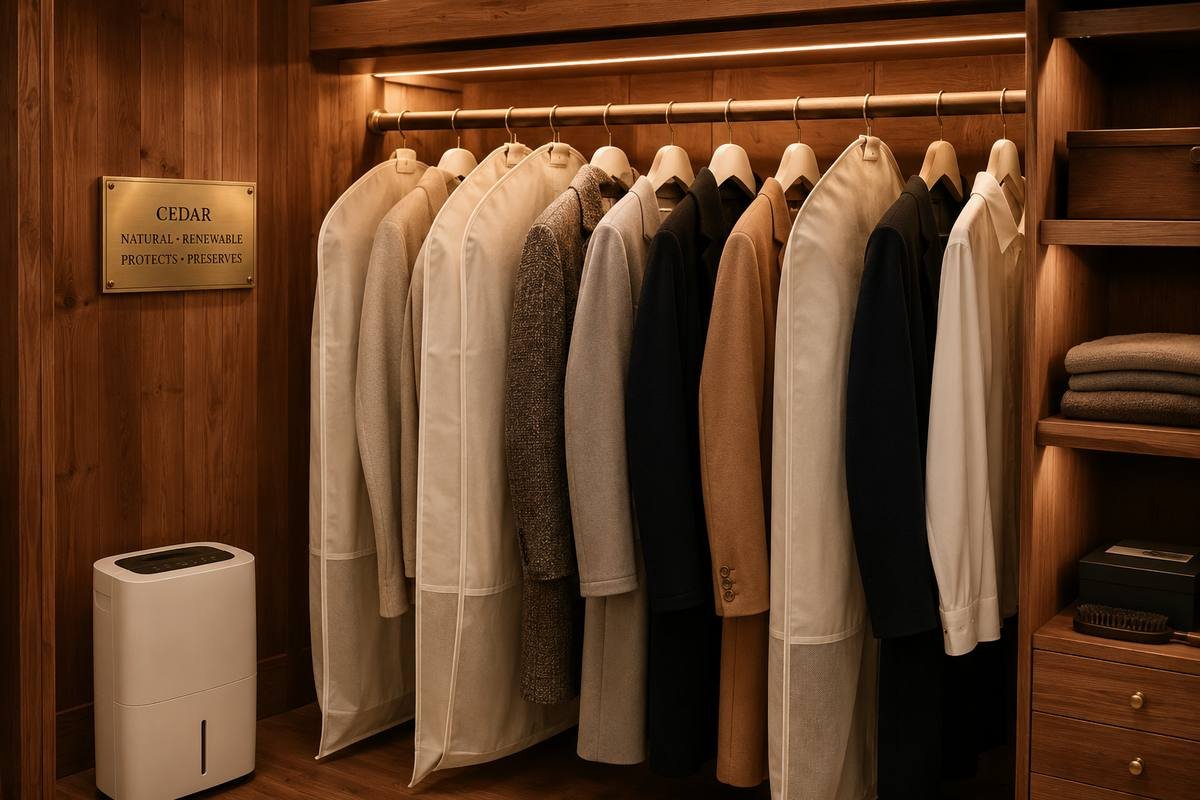
- Use breathable cotton or canvas garment bags rather than plastic dry-cleaning film, which seals in moisture.
- Consider a small wardrobe dehumidifier or moisture absorber, particularly in homes close to the water.
- Keep garments off the floor and away from external walls, where condensation is worst, and open wardrobe doors to air on dry days.
If you would rather not manage this yourself, our pickup and delivery service across the Lower North Shore, Eastern Suburbs and wider Sydney makes it simple to have winter pieces cleaned and returned storage-ready. A little care at the change of season protects garments that are often irreplaceable.
Frequently Asked Questions
Can mould be removed from a wool coat or silk dress?
Usually, yes — if it is treated early. Specialists remove the growth safely, then treat residual pigment staining with fibre-specific methods. The longer a colony feeds, the harder the staining is to lift, so act at the first musty smell.
Why do home remedies like vinegar make garment mould worse?
Acids strip dye from delicate fabrics, brushing drives spores deeper and releases them into the air, and direct sun fades colour and yellows ivory. On fine garments these often cause more visible damage than the mould itself.
How do I stop mould coming back next winter?
Store only cleaned garments, use breathable cotton bags rather than plastic, leave space for air to move, and keep wardrobes off damp external walls. In harbourside homes, a wardrobe moisture absorber is worthwhile insurance.
Mould rewards speed — and punishes waiting. From Mosman and Cremorne across to Neutral Bay and 58 Sydney suburbs, we collect from your door, assess every piece individually, and return your wardrobe clean, deodorised and safe. Standard turnaround is 3–5 days, with express options on request. Book a pickup online or call 0485 511 744.