
When the spring-cleaning urge arrives, most Sydney households reach for the obvious targets — windows, floors, the backs of cupboards. Curtains and drapes are almost always overlooked, which is ironic, because they are frequently the single largest textile surface in the home and quietly the dirtiest after a winter indoors. A living room’s drapes can hold more accumulated dust and residue than the rest of the room’s soft furnishings combined — and arranging their collection is far easier than most people expect — professional curtain cleaning without the ladder work.

The Biggest Thing in the Room Nobody Thinks to Clean
Winter is particularly hard on window dressings. With windows closed for months, curtains act as enormous filters, catching airborne dust, cooking residue, pet hair and the fine particulate produced by heating. Add the condensation that forms on cold glass and runs into the fabric at the hem and edges, and you have the perfect recipe for grime, musty odour and even mould along the bottom of a curtain. Spring is the natural moment to reset all of it.
Part of the reason curtains escape attention is that they decline so gradually. Nobody notices a curtain getting dustier from one week to the next, and because both curtains in a pair age at the same rate, there is no clean reference point to compare against. It is only when a freshly cleaned panel hangs beside an untouched one that the difference — in colour, in brightness, in smell — becomes obvious.
What Winter Leaves Behind in Your Drapes
Several distinct problems build up in curtains over a Sydney winter:
- Dust and particulate settle deep into the weave, dulling colours and greying whites.
- Heating residue — fine soot and oily particulate from ducted systems and gas heaters — gives long-unwashed drapes a slightly grimy hand and a stale smell.
- Condensation is the most damaging: curtains that touch or hang near cold glass absorb moisture night after night, producing tide marks, musty odour and mildew along hems and leading edges.
- Cooking films from more time at the stove settle onto kitchen and living-area curtains, trapping dust and holding odour.
The moisture problem is worst in bedrooms, where breathing overnight adds to the load. Left through a warm spring and summer, that dampness can set into permanent staining.
Why Curtain Cleaning Is Not a DIY Job
It is tempting to simply pull curtains down and put them through the washing machine, but this is where a great many are ruined. Curtain fabrics are often unstable in water: linings can shrink at a different rate to the face fabric, causing the whole curtain to pucker and hang unevenly; rich colours can bleed; and interlinings can bunch. A pair of drapes that fitted the window perfectly can emerge from a home wash noticeably shorter and permanently distorted.
Many quality curtains are also elaborately constructed — lined, interlined, weighted at the hem, pleated and headed — and this structure does not survive tumbling and wringing. Delicate sheers can tear, and heavier fabrics can lose the crisp fall of their pleats. Then there is the practical problem of size: full-length drapes are simply too large for a domestic machine to clean or dry properly.
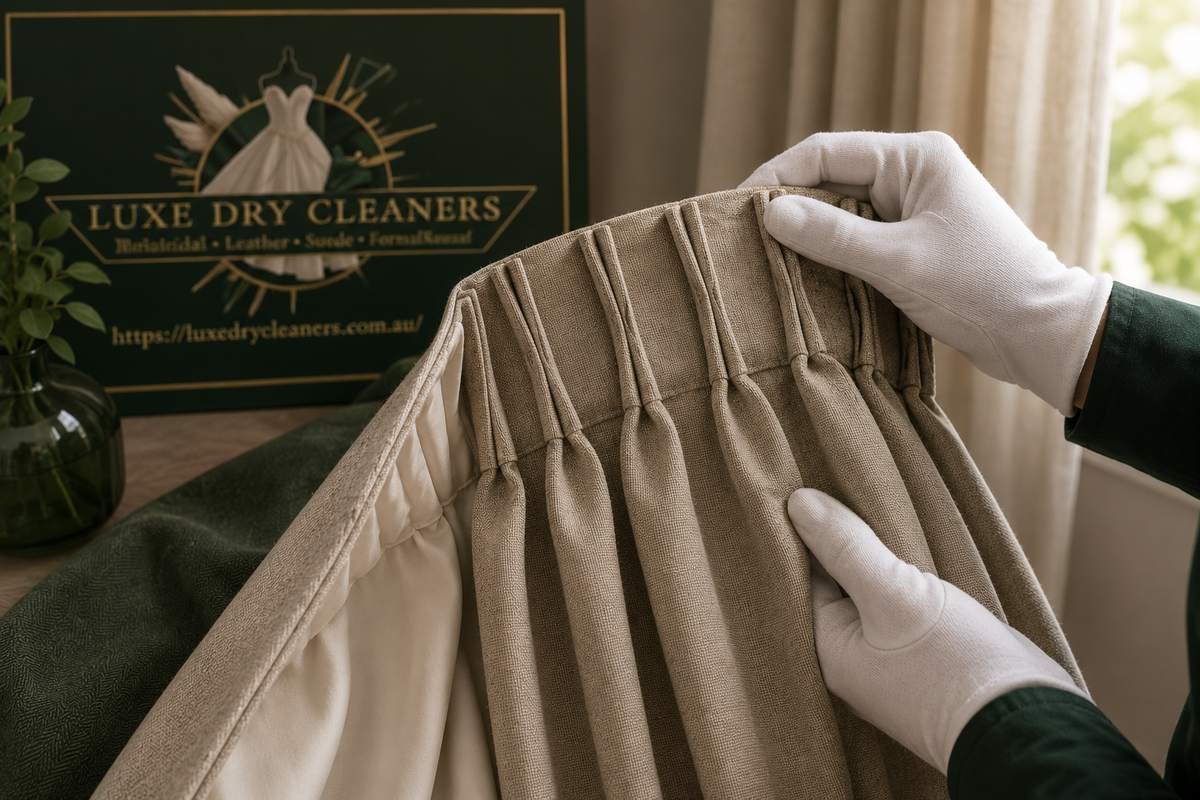
Specialist cleaning sidesteps all of this. Curtains are assessed for fabric type, lining and construction, cleaned using the method that suits them, and finished so they return to their proper length and hang. The pleats fall correctly, the colours lift, and the fabric is left fresh rather than merely damp-smelling.
The range of curtain fabrics in a single home is another reason to leave it to specialists. A house might have heavy lined wool drapes in the living room, delicate voile sheers in the bedrooms, and blockout-backed panels in the study — three completely different materials that each demand a different approach. Treating them all the same way, as a home wash inevitably does, is how at least one of them ends up ruined.
The Spring-Clean Benefits Beyond Appearance
Clean curtains do more than look better. Because they function as room-sized filters, they hold a meaningful share of a home’s dust and allergens, and refreshing them genuinely improves indoor air quality — a real benefit heading into spring, when pollen adds to the airborne load and hay fever season begins. For households with allergies, clean drapes make a noticeable difference.
There is also a longevity argument. Dust and particulate are mildly abrasive, and left in the fabric they slowly wear the fibres every time the curtains move in a breeze or are drawn. Regular professional cleaning removes that abrasive load and extends the life of what is often a significant investment. Removing winter moisture promptly, before it can set over the warm months, prevents the permanent mildew staining that ends a curtain’s life prematurely.
For south-facing rooms and those close to the water — where condensation and coastal damp are worst — this seasonal clean is less a luxury than basic maintenance. It is far cheaper to care for a set of quality drapes each spring than to replace them every few years when the hems have gone mouldy and the colour has flattened.
There is a light-and-mood dimension worth noting as spring arrives. Clean curtains transmit and filter daylight differently to grimy ones — a dust-laden sheer casts a slightly grey, muddy light, while a freshly cleaned one lets the room fill with the clear, bright light that makes spring feel like spring. It is one of those changes nobody can name but everybody notices when they walk into the room.
Making It Effortless
The practical hurdle with curtains is always the taking down and rehanging, which is exactly why so many go years without a clean. Our service is designed around that friction: we can arrange collection and return so the heavy lifting is handled for you, and your drapes come back fresh, correctly finished and ready to rehang.
Rugs, another large textile that absorbs a winter of foot traffic and damp, benefit from the same seasonal reset — but curtains are the quiet win of a Sydney spring clean, transforming the light, the air and the feel of a room in a way that dusting shelves never quite matches. Tackle them once, at the change of season, and the whole room feels renewed.
Timing it for early spring also makes the most of the season ahead. Clean drapes rehung as the weather warms mean you head into the brighter months with rooms that feel fresh and open, windows that can be thrown open without stirring up a winter’s dust, and window dressings that will stay in good order until it is time to do it again next year.
Frequently Asked Questions
Can I wash curtains in the washing machine?
Usually not safely. Linings shrink at different rates to face fabric, colours bleed, pleats collapse, and full-length drapes don’t fit a domestic machine. Professional cleaning matches the method to each fabric and returns them at the correct length and hang.
How often should curtains be professionally cleaned?
Once a year is ideal, at the end of winter — after the season of closed windows, heating residue and condensation, and before spring pollen adds to the load.
Do clean curtains really help with allergies?
Yes. Curtains act as room-sized filters holding dust, allergens and mould spores; cleaning them before hay fever season measurably lightens the indoor allergen load.
From Kirribilli and Northbridge to Cremorne and across 58 Sydney suburbs, we take the friction out of the job — collection and return handled for you, every panel assessed, cleaned to its fabric and finished to hang correctly. Standard turnaround is 3–5 days, with express options on request. Book a pickup online or call 0485 511 744.