
White is the colour Sydney reaches for when the weather turns. White linen shirts and trousers, cream silk blouses, ivory blazers, the white dress bought for a spring wedding and worn to three more. It is also the colour that shows its age fastest. A white garment does not fade. Instead, it yellows, greys or dulls in ways that are hard to reverse once they set. The reasons are chemical, and the remedies mostly come down to timing. That is where white clothes dry cleaning from a service that collects at your door earns its place. Cleaned properly and before the yellowing shows, white linen, cotton and silk stay bright longer. Left to a domestic machine and a bottle of something from the supermarket, they often do not last the season. A pickup at the start of spring, before the first wear, is the simplest place to begin.
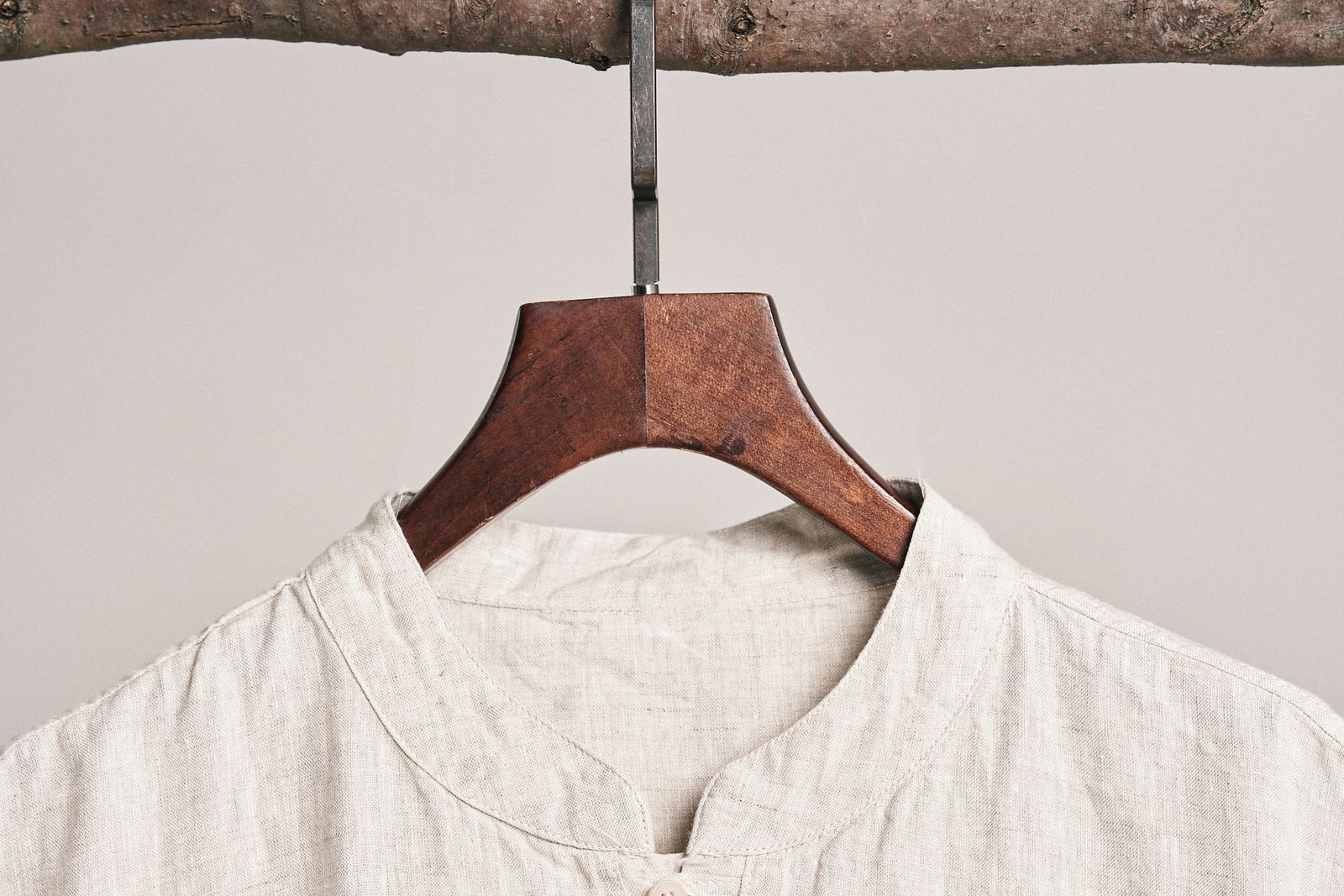
White linen shirts, cream silk and ivory blazers come out of the wardrobe in October and start to yellow by November. Book a pickup before the first wear and after each one that counts.
White clothes dry cleaning: why whites turn yellow and grey
Yellowing in white garments comes from three sources, and they compound each other. Prompt white clothes dry cleaning deals with all three before they set. The care label also tells you which method the fibre will tolerate. The Product Safety Australia guide to care labels explains the symbols.
- Body oils and perspiration. Invisible at first, they oxidise in the fibre over weeks and turn cream, then yellow, then brown. Collars, cuffs, underarms and the back of the neck go first. Warmth accelerates it. That is why a white shirt put away clean-looking in March comes out in October with a yellow collar.
- Sunscreen. One of the biggest causes of yellow marks on white clothing in Sydney. Many sunscreens contain avobenzone, which reacts with minerals in water to produce a rust-coloured stain. Ordinary washing then sets that stain rather than removing it. It appears at necklines, straps and cuffs, wherever sunscreen on skin meets fabric.
- Residue. Unrinsed detergent, fabric softener and the optical brighteners in many supermarket products all build up in white fibres. Then they turn grey or yellow under light. The whiter the product promises to make things, the more likely it is to leave a film.
Greying is different. It usually comes from soil redepositing during a wash, or from washing white garments with anything that is not white. Dulling, meanwhile, is a mix of both, plus the flattening of surface fibres in linen and silk from machine agitation.
White linen
Linen is the spring cloth and white is its natural colour, which is why the two are so often together. It washes well in principle, but domestic machines are hard on it. The fibres flatten and the surface goes fuzzy. Then, after a few washes, the crisp hand that makes linen worth wearing disappears. Yellowing at the collar and underarms is common because linen absorbs perspiration so readily.
Professional cleaning for white linen is a judgement between two methods. Wet cleaning suits unstructured shirts and trousers (see our linen care service). Solvent cleaning, by contrast, suits linen jackets and suits with linings and canvassing. Either way, the pressing matters as much as the cleaning. On the right equipment, linen finishes with the soft, considered crumple it should have. A domestic iron instead leaves sharp creases. Our dry cleaning service assesses each linen piece for the right method.
Dry cleaning white and cream silk
Silk is the fabric that suffers most from home treatment. Water alone leaves rings on it. Sunscreen and perspiration also set into it quickly and yellow it from within. Optical brighteners, found in almost every domestic detergent, make white silk look blue-white in daylight and dull under evening light. They also do not rinse out.
White and ivory silk needs gentle solvent cleaning by someone who handles it constantly. Point out stains at pickup rather than treating them at home. In practice, the ring left by a well-meant dab of water is often harder to remove than the original mark. For the detail on silk types and how each behaves, see why different silks need different care.
Ivory and white blazers
A white or ivory blazer is the spring garment that good intentions most often ruin. It cannot go in a machine because of its lining and structure, and it shows every mark. It also goes to garden parties, long lunches and daytime weddings, exactly where sunscreen, rosé and grass are all present.
The rule for a white blazer is simple: clean after each occasion, not after each season. A blazer worn once to a lunch may look fine. However, the perspiration in the lining and the sunscreen at the collar are already there. They will show by the time you next take it out. Cleaned promptly, a white blazer has every chance of staying white for years. Our designer garment service handles white and ivory jackets with the care its colour demands. If you need the blazer again within days, choose Rush (+100%) at booking. Meanwhile, same-day dry cleaning is subject to availability: book it and we confirm.
Before white clothes dry cleaning: what not to do at home
- No chlorine bleach on anything you value. It yellows silk and wool permanently and weakens linen and cotton. It also turns some white synthetics a dull cream that nothing will reverse.
- No optical brighteners on silk or fine linen. They coat the fibre, and nothing removes them.
- No hot water on sunscreen marks. It sets them. Instead, cold water and prompt professional cleaning is the answer.
- No mixed loads. One pale blue sock is enough to grey a white linen shirt.
- No storing whites in plastic. It traps humidity and encourages yellowing. Breathable cotton covers, away from light, are the alternative.
If something has already yellowed, do not write it off. Set stains on white are among the more recoverable problems a specialist sees. Even so, that depends on nothing at home having fixed them further. Our guide to yellowing in knitwear covers wool and cashmere in particular. Leave the piece as it is for white clothes dry cleaning and point out the marks at pickup.
White clothes dry cleaning: your questions, answered
Why do my white clothes yellow at the collar and underarms?
Body oils and perspiration oxidise in the fibre over weeks and turn yellow, especially with warmth. Sunscreen also adds rust-coloured marks at necklines and cuffs. Cleaning promptly after wear, before these residues oxidise, prevents most yellowing.
Can yellowed white silk or linen be brightened again?
Often, yes. Set stains on whites are among the more recoverable problems a specialist sees. That holds as long as nothing at home, such as bleach or hot water, has fixed them further. Point out the marks at pickup and we assess them first.
Should white linen be dry cleaned or washed?
It depends on the piece. Unstructured linen shirts and trousers suit gentle wet cleaning; linen jackets and suits with linings and canvassing need solvent cleaning. Luxe assesses each garment and chooses the method that keeps it bright and keeps its hand.
Can dry cleaning remove sunscreen stains from white clothes?
Often, yes, provided hot water or a tumble dryer has not set the mark. Sunscreen stains are oil-based with a mineral component. So we treat them by hand before cleaning the garment, rather than leaving them to the general process. Point out the marks at pickup, tell us which product caused them if you know, and we assess them first. Indicative prices are on our pricing page.
For white clothes dry cleaning, Luxe collects white linen, cotton, silk and ivory blazers from Bondi, Vaucluse, Kirribilli, North Sydney and across Sydney. We clean them with an eco-friendly solvent chosen to keep whites bright, then return them pressed. Book online or call 0485 511 744. Pickup and delivery, $25 flat.