
When Sydneysiders think of spring, they picture jacaranda beginning to colour the streets, warmer harbour breezes, and the first weekend that finally feels like stepping out of winter. What almost no one pictures is the fine dusting of pollen that arrives alongside all of it — and settles, quietly and continuously, into everything they wear. From September through November, grass and tree pollen counts across Sydney climb sharply, and the city’s warm, breezy spring days are precisely the conditions that carry pollen furthest. For anyone prone to hay fever, the effect is obvious and immediate. What is far less obvious is that your clothing becomes a carrier in its own right. It is the moment considered luxury garment care in Sydney quietly earns its keep.
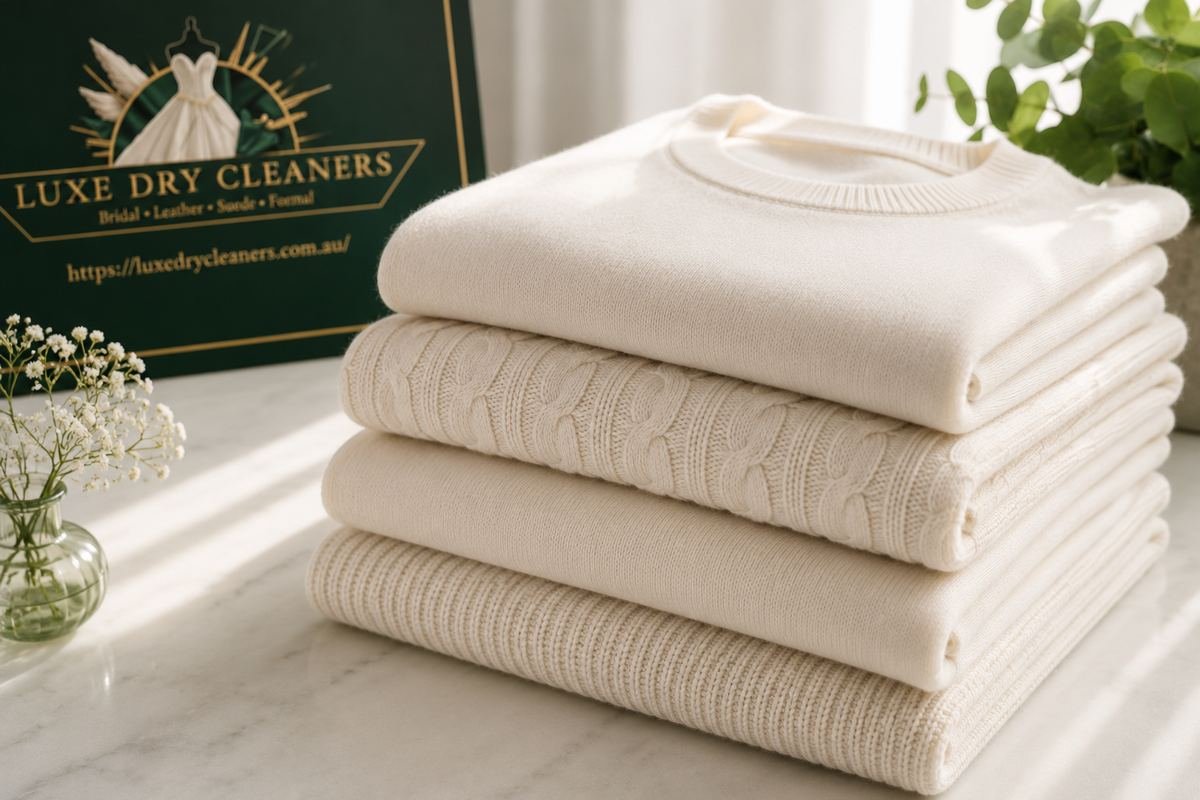
Sydney’s pollen season runs September to November. Book a pickup before it settles into your finest pieces.
Why natural fibres hold onto allergens
Pollen, together with dust, mould spores and the microscopic residue of a long season spent mostly indoors, clings to natural fibres far more readily than it does to synthetics. The qualities that make luxury fabrics so desirable are, unfortunately, the same qualities that make them welcoming to allergens. Wool and cashmere have a scaled, slightly open fibre structure — the very thing that gives them warmth and loft — and those tiny scales trap fine particles and hold them against the body of the cloth. Silk carries a natural static charge that actively draws airborne dust and pollen toward it. Linen’s characteristically loose, breathable weave leaves generous room for particles to lodge between the threads. A garment worn to a spring lunch in the Royal Botanic Garden, a morning at the races, or simply a walk through a leafy Eastern Suburbs street can return home carrying far more than its wearer ever realises.
Left unaddressed, these trapped particles do two distinct kinds of harm. The first is to the wearer: the garment reintroduces allergens against the skin every time it’s worn, sometimes for weeks after the pollen count itself has dropped, which is why a favourite jumper or scarf can seem to prolong a person’s hay fever well beyond the season. The second kind of harm is to the garment. Over time, fine grit and pollen work their way deeper into the weave, and as the fabric flexes with wear, those particles abrade the fibre from within. This is a significant and under-appreciated cause of the gradual dulling and greying that overtakes pale fabrics — the loss of that crisp, clean brightness that made the piece feel luxurious in the first place.
Why a domestic wash isn’t luxury garment care
The natural instinct is to deal with all this at home, but for the fabrics most likely to be carrying allergens, that instinct frequently causes more damage than the pollen ever would. Cashmere and wool felt, shrink and distort in warm water and agitation, losing both their shape and their softness in a single cycle. Silk waterspots and loses its finish. Tailored pieces, with their internal canvassing and structure, collapse entirely when saturated and spun. The cruel irony is that the garments most in need of allergen removal are precisely the ones least suited to a domestic machine — which is why so many treasured pieces are quietly ruined by well-meaning attempts to freshen them up.
Specialist cleaning resolves this properly. A professional process is designed to lift particulate matter from deep within the fibre without the heat, friction or saturation that damages delicate cloth. Rather than simply agitating a garment in water and hoping, the method is matched to the fabric — so that pollen, dust and residue are genuinely drawn out rather than merely pushed around. The piece is returned not just visibly clean but truly refreshed, with the allergen load removed rather than redistributed to another part of the cloth.
Luxury garment care in Sydney: the pieces worth attention this month
Not every garment needs immediate attention, but some clearly earn priority as September begins. Knitwear worn through the tail end of winter and now heading into storage should be cleaned before it’s packed away — otherwise allergens, body oils and perspiration are sealed in against the fibres for six months, oxidising and setting in the dark, and the piece emerges next winter marked, stiff and sometimes attractive to moths. Silk blouses, scarves and lightweight layers being brought back into rotation for the warmer months deserve a refresh before their first spring wearing, so they begin the season genuinely clean rather than merely aired out. And any occasion piece worn outdoors — to a garden wedding, a spring celebration or a raceday on the grass — benefits from prompt attention while the pollen is fresh and easily lifted, rather than left to settle.
There’s also a simple sequencing point worth making. If you’re doing the seasonal wardrobe changeover — moving winter pieces out and spring pieces in — that changeover is the ideal moment to clean, because you’re handling everything anyway. Cleaning at the point of transition means winter pieces go into storage in good condition and spring pieces come out ready to wear, all in one considered pass.
A quiet ritual worth keeping
There is something quietly satisfying about beginning a new season with a wardrobe that is genuinely clean rather than simply put away. The pieces you reach for feel better against the skin, they wear better through the months ahead, and — because clean fibres wear more slowly than grit-laden ones — they last longer for it. Pollen season is an unavoidable fact of a Sydney spring; carrying that pollen around in your finest garments, for weeks longer than necessary, is not. Treat it as part of your seasonal luxury garment care Sydney routine.
A fair question follows from all of this: if allergens and residues build up so readily, should delicate pieces be cleaned constantly? The answer, reassuringly, is no — and over-cleaning carries its own risks. Knitwear and tailoring worn close to the body benefit from cleaning at the natural turning points: the end of a season, before storage, and after any heavy or memorable wearing. Silk and occasion pieces are best cleaned promptly after each outing rather than on a fixed schedule, because it’s the residues left to sit that cause harm, not the wearing itself. Between cleans, gentle airing, proper hanging and a soft brush do far more good than most people realise. The aim is not relentless cleaning but well-timed cleaning — and a specialist can help you find that rhythm for the particular pieces you own and wear most.
Between professional cleans, the Woolmark care guides are a fine reference for wool and cashmere at home — and when the season demands more, our luxury garment care Sydney service is only a pickup away.
Your Questions, Answered
Does dry cleaning remove pollen and allergens from clothes?
Yes — properly matched specialist cleaning lifts pollen, dust and fine particulate from deep within natural fibres without the heat, friction or saturation that damages delicate cloth, so the allergen load is genuinely removed rather than redistributed.
Which fabrics hold the most pollen?
Wool, cashmere, silk and linen — the scaled structure of wool and cashmere traps particles, silk’s static charge attracts them, and linen’s open weave gives them room to lodge. Synthetics hold far less.
When should winter knitwear be cleaned before storage?
Before it’s packed away, at the seasonal changeover. Storing knitwear unwashed seals allergens, body oils and perspiration against the fibre for months, where they oxidise, set and attract moths.
From Mosman and Neutral Bay to Double Bay, Woollahra and Bellevue Hill, Luxe collects door to door, seven days a week. Let us refresh the knitwear, silks and occasion pieces you’ve carried through winter — hand-finished, perc-free, and returned ready for the season. Explore our garment care services or call 0485 511 744.