
While coats and knitwear go into storage at the end of winter, the working wardrobe does the opposite — it just keeps going. Suits, tailored trousers, blazers and business shirts are worn week in and week out through the cold months, often on a tight rotation of two or three suits doing daily duty. By the time spring arrives, that hardworking core of the wardrobe is tired in ways that are easy to ignore and worth addressing before the new season’s calendar begins. A single collection resets the whole rotation at once — suit cleaning, pressing and shirts in one order.
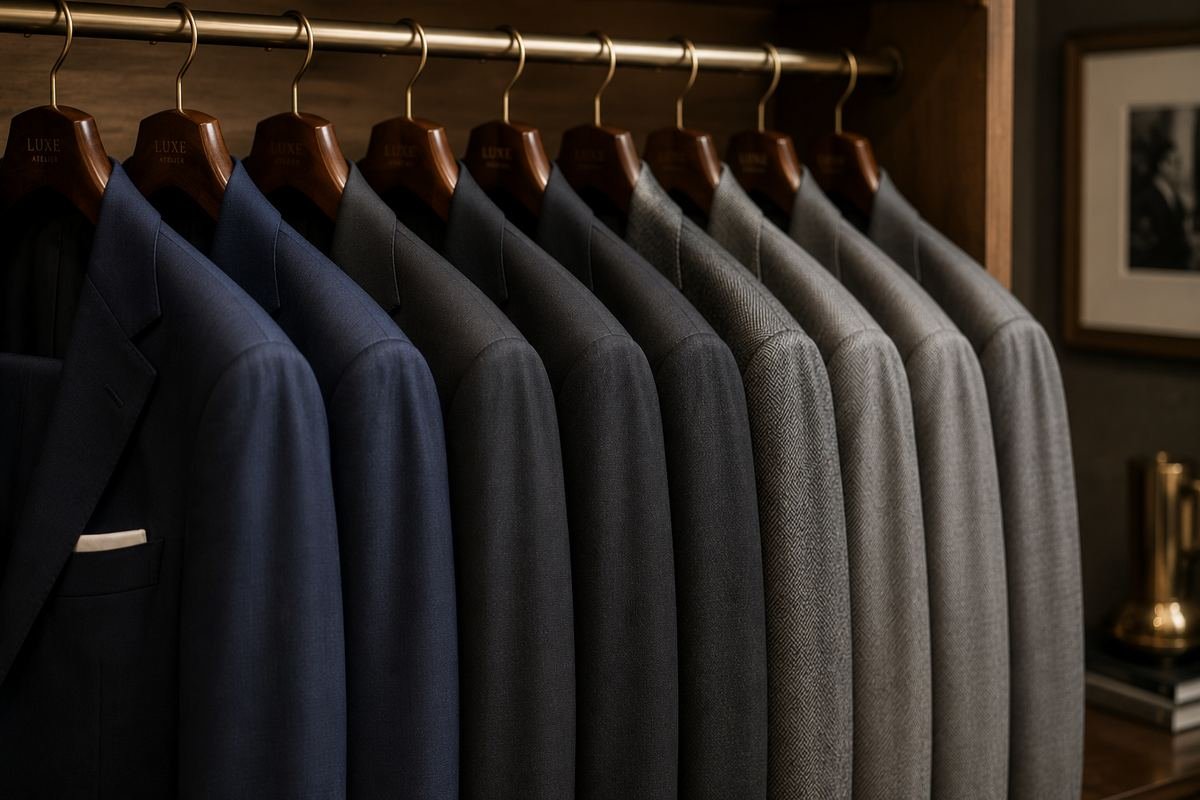
The Wardrobe That Never Got a Break
The change of season is a natural service point for tailoring. Just as you would not run a car indefinitely without a service, a suit worn hundreds of times over winter benefits from a proper clean, press and reset before it goes back into heavy use. Doing it now — rather than when a garment finally looks unacceptable — is what keeps a work wardrobe looking sharp and lasting for years rather than seasons.
For anyone whose work depends on presenting well — client-facing professionals, executives, anyone who lives in a suit — this is not vanity but maintenance. A sharp, well-kept suit does quiet work in every meeting, and a tired one undermines the impression before a word is spoken. The end of winter is when that quiet asset most needs attention.
What Heavy Winter Wear Does to a Suit
Several things happen to a suit over a winter of constant wear:
- Loss of press — lapels soften, trouser creases fall, and the crisp lines that make tailoring look expensive gradually blur.
- Invisible soiling — body oils, perspiration and daily grime concentrate at the collar, cuffs and underarms, oxidising and setting over time.
- Shine — high-friction areas like the seat, elbows and forearms develop a glazed sheen as fibres are flattened and polished by repeated contact.
- Staleness — the odour of a garment that has been damp under a coat or on a humid day and never fully refreshed.
Left unaddressed, shine becomes permanent and is one of the clearest signs of a suit worn hard without care. Proper cleaning and pressing lifts and resets the fibres, restoring the fabric’s natural matte finish before the shine sets in — and a professional clean removes the accumulated staleness in a way that airing alone cannot.
The business shirts that partner these suits take an even harder beating. Worn close to the skin and often five days a week, they collect the heaviest concentration of perspiration, body oil and the collar grime that turns into the stubborn ‘ring around the collar’ if it is not properly treated. Shirts also live and die by their pressing, and a crisply finished collar and cuff do as much for a polished appearance as the suit itself. Refreshing the shirts alongside the tailoring completes the picture.
Why Rotation and Rest Matter
One of the most valuable lessons in caring for tailoring is that suits need rest. Wearing the same suit day after day never lets the fabric recover between wears — wool has a natural ability to shed creases and spring back into shape if it is allowed to hang and breathe for a day or two, but a suit in constant rotation never gets that chance. Over a winter of heavy use, this is how a good suit becomes prematurely tired.
The spring refresh is the moment to reset this. Having your core suits professionally cleaned and pressed at once brings them all back to a common high standard, and it is also the ideal time to think about rotation for the season ahead. A wardrobe of three or four suits rotated with a day’s rest between wears will comfortably outlast the same suits worn back-to-back, and each will look better on any given day. Cleaning restores the garment; rotation preserves the restoration.
Good hanging habits reinforce the same point. A suit deserves a shaped wooden hanger that supports the shoulders, room to breathe rather than being crushed between other garments, and a brush-down after wear to lift surface dust before it settles. These small daily habits, combined with a proper seasonal clean, are what separate a suit that looks good for a decade from one that looks tired within two winters.
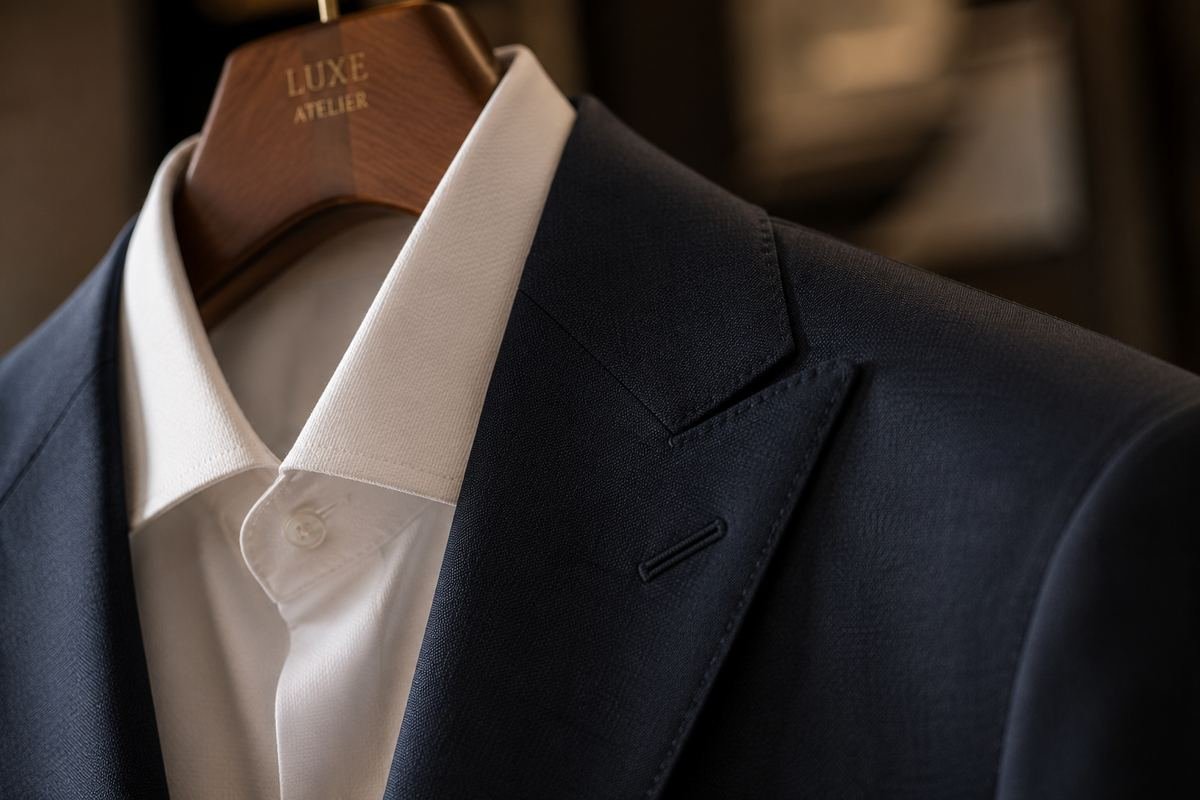
The Case Against the Home Iron
It is tempting to keep a suit going with a home iron and the occasional spot-clean, but tailoring is one of the areas where domestic care most often does harm. A household iron applied directly to suiting causes shine and scorch, flattens the structure, and can leave impressions of seams and pockets pressed through to the face of the fabric. The internal canvassing and structure that give a jacket its shape are easily distorted by amateur pressing.
Professional finishing uses methods designed for tailoring — steam and specialist pressing that reshape the garment without glazing it, restoring the roll of the lapel, the line of the trouser and the set of the shoulders. Combined with cleaning that removes the winter’s soiling without stressing the fabric, this returns a suit to a genuinely as-new appearance. Over-cleaning is its own mistake, so the aim is the right clean at the right interval — and the end of winter, after a season of heavy wear, is one of the clearest right intervals in the year.
Spot-treating stains at home carries its own risks. Rubbing at a mark on wool suiting can distort the weave and leave a permanent halo, and many household stain removers are too harsh for tailoring fabric. A better instinct is to blot, leave it, and let a specialist treat it — the fabric is far more forgiving in professional hands than under a panicked scrub at the kitchen sink.
Ready for the Season Ahead
Spring in Sydney brings a busier professional and social calendar — client functions, spring events, warmer-weather meetings — and a work wardrobe that has been refreshed and reset is ready for all of it. Shirts crisp and bright, suits sharp and matte, trousers holding a proper crease: the difference is immediately visible and quietly powerful in any professional setting.
Our pickup and delivery service makes the seasonal refresh effortless for busy professionals. Send your winter rotation in at the change of season, and it comes back cleaned, pressed and reset — no lunchtime dry-cleaning runs, no scramble the night before an important meeting.
For executives visiting Sydney, the same service reaches your hotel: we collect from and deliver to hotels across the CBD, Barangaroo and Circular Quay, returning suits and shirts pressed and boardroom-ready. And for firms, we handle corporate volume — a team’s tailoring collected from one address, cleaned to one standard, returned on one schedule. Call 0485 511 744 to arrange either.
For anyone who relies on a small, hardworking set of suits, a standing seasonal arrangement takes the thinking out of it entirely: the winter rotation is refreshed as the weather turns, ready for the busier spring calendar, and the cycle repeats without you ever having to remember to organise it. Good tailoring rewards this kind of steady, unglamorous maintenance more than almost any other category of clothing.
Frequently Asked Questions
How often should a suit be dry cleaned?
Less often than most think — over-cleaning wears wool. The reliable rhythm is a proper clean and press at the change of season, with pressing in between, and prompt attention to any stain.
Can shine on trousers and elbows be fixed?
If caught before it sets permanently, yes — professional cleaning and pressing lift and reset the flattened fibres, restoring the fabric’s natural matte finish. Long-ignored shine becomes permanent.
Do you offer suit cleaning with hotel or office pickup in Sydney?
Yes — we collect from homes, offices and hotels across 58 suburbs including the CBD, Barangaroo and Circular Quay, with standard turnaround of 3–5 days.
Sharp tailoring is quiet infrastructure — it works hardest when nobody notices it. From the CBD, Barangaroo and Circular Quay to The Rocks, we collect winter rotations from homes, offices and hotels and return them cleaned, pressed and reset for the spring calendar. Standard turnaround is 3–5 days, with express options on request. Book a pickup online or call 0485 511 744.