
A good rug anchors a room, and in winter it works harder than at any other time of year. As the weather cools, life moves indoors and downward: people gather in the living areas, the household spends far more time at home, and the rug underfoot absorbs the concentrated traffic of a season spent inside. By the time spring arrives, a fine rug has quietly taken on more grit, soil and moisture than most owners would ever guess from a glance — which is why arranging the collection is the easy half of the job — professional rug cleaning handles the rest.

The Floor That Held the Whole Winter
The end of winter is the ideal moment to have quality rugs professionally cleaned. A handmade wool or silk rug is often one of the most valuable furnishings in a home and among the longest-lived — a well-cared-for piece can last generations. But that longevity depends on removing the winter’s accumulated load before it does lasting harm, and on treating the rug with the specialist care its construction demands.
It is easy to underestimate a rug because, unlike a stained shirt, it rarely looks dramatically dirty. The damage a rug accumulates is mostly hidden in its depths, and a rug can look acceptable on the surface while carrying a heavy load of abrasive grit and set-in soil beneath. The cost of ignoring it is not an ugly stain today but a shortened life and faded colours over the years.
What Winter Grinds Into a Rug
The most damaging thing a rug accumulates over winter is not visible spills but fine, dry grit. Soil, sand and dust are tracked in from outside and settle deep into the base of the pile, below the surface where vacuuming reaches. This grit is abrasive, and every footstep grinds it against the fibres like sandpaper. Over a heavy-traffic winter, that abrasion dulls colours and wears the pile in exactly the pathways people walk most. Much of the ‘wear’ that ages a rug is really the slow cutting action of embedded grit.
Then there are the winter-specific hazards. More time indoors means more spills — wine, coffee, food dropped during the season’s dinners and gatherings — and these soak into the pile and, if untreated, set into permanent marks. Sydney’s winter damp adds another dimension: rugs near doors, windows or on cooler floors absorb moisture, and a rug that stays damp can develop mustiness, mildew and even dry rot in its foundation. Pets and heating complete the picture, adding hair, dander and a general staleness that builds unnoticed.
Rugs in entrance areas and hallways bear the heaviest burden, because they catch everything carried in from outside before it reaches the rest of the home. These high-traffic pieces are often the finest in the house and the most exposed, which makes them the clearest candidates for a proper end-of-winter clean.
Why Fine Rugs Demand Specialist Cleaning
Handmade and fine rugs are not the same as fitted carpet, and they should never be treated as such. Many are coloured with dyes that can bleed or run if cleaned incorrectly, and a common outcome of a well-meaning home attempt — or a generalist carpet cleaner — is colour migration, where one colour bleeds into another and permanently muddies the design. Natural silk rugs are especially sensitive and intolerant of aggressive wet cleaning.
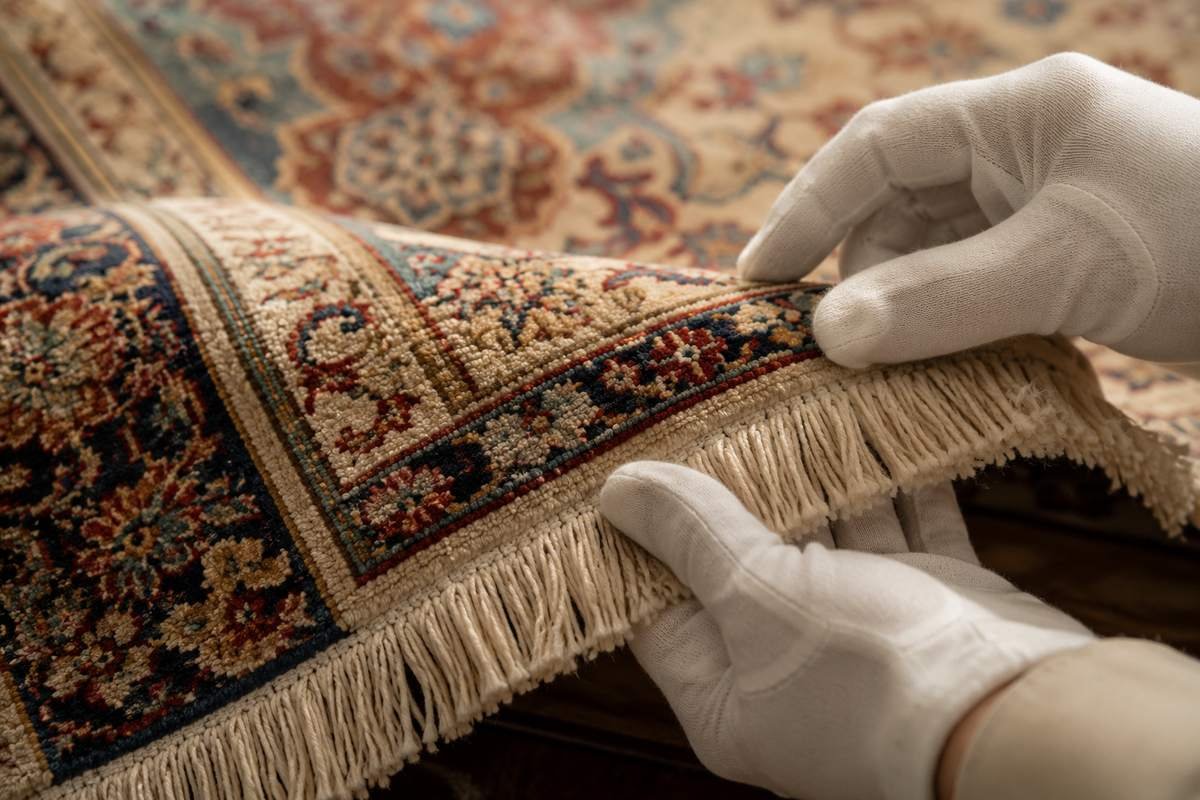
Over-wetting is another serious risk. A rug soaked and not dried correctly can develop foundation mould, odour and rotting of the threads that hold it together, along with distortion of its shape. The fringes, which are usually an extension of the rug’s structural foundation rather than a decorative add-on, are easily damaged by harsh handling. Getting any of this wrong on a valuable, often irreplaceable piece is an expensive mistake.
Specialist rug cleaning addresses all of this deliberately. The rug is assessed for its fibre, construction, dyes and condition; the deep grit is removed through proper dusting before any wet process; cleaning is matched to the rug and its colours; and — critically — the rug is dried in a controlled way that protects the foundation. The outcome is a rug that is clean to its base, with colours revived rather than compromised.
The dusting stage is the part most home methods skip entirely, and it is arguably the most important. Because the damaging grit sits deep at the base of the pile, no amount of surface cleaning reaches it — and washing a rug while that grit is still in it simply turns dry abrasive into a muddy paste worked further into the foundation. Removing the dry soil first, thoroughly, is what allows the wash to actually clean rather than merely rearrange the dirt.
The Payoff: Colour, Longevity and a Healthier Room
The first thing people notice after a proper clean is colour. Rugs dulled by a winter of grit and soil come back noticeably brighter, their patterns sharper and their depth restored — many owners are surprised how much colour was hiding under the accumulated soil. But the more important benefit is invisible: by removing the abrasive grit, professional cleaning stops the slow wearing of the fibres and genuinely extends the life of the rug.
There is a wellbeing benefit too. Rugs hold dust, allergens and the residues of a season indoors, and a deep clean heading into spring — when pollen and hay fever arrive — improves the air of the room and removes the stale, closed-up feeling of a long winter. For a valuable rug, regular professional cleaning is also a form of asset protection: antique and handmade rugs hold their value when they are kept in good condition.
Between professional cleans, a little routine care goes a long way:
- Vacuum regularly on a low setting to remove surface grit before it works its way down.
- Rotate the rug periodically to even out traffic and fading.
- Deal with spills immediately by blotting — never rubbing — to prevent most permanent marks.
None of this replaces the annual specialist clean, but it slows the accumulation of the very grit and staining that clean is designed to reverse.
Effortless Seasonal Care
As with curtains and doonas, the practical barrier to rug care is simply the handling — fine rugs are heavy and awkward to move. Our service is designed to remove that friction: we can arrange collection and return across the Lower North Shore, Eastern Suburbs and greater Sydney, so your rugs come back cleaned, revived and ready to be walked on for another year.
Cleaning quality rugs once a year, at the end of winter, is one of the simplest and most rewarding pieces of seasonal maintenance a home can do. It also dovetails neatly with the rest of the seasonal reset: the same weekend you clean the curtains, air the wardrobes and pack away the winter doona is the natural moment to send the rugs out as well — so the whole home emerges from winter clean, fresh and ready for the brighter months.
Frequently Asked Questions
How often should a fine or handmade rug be professionally cleaned?
Once a year, ideally at the end of winter after the season of heaviest indoor traffic — before embedded grit does another year of abrasive damage and before spring humidity sets any damp in.
Why can’t a regular carpet cleaner handle a handmade rug?
Fine rugs carry dyes that can bleed, foundations that rot if over-wetted, and fringes that are structural, not decorative. Specialist cleaning dusts out the deep grit first, matches the wash to the dyes, and dries the rug in a controlled way.
Do you collect rugs for cleaning in Sydney?
Yes — fine rugs are heavy and awkward, so we collect and return them across our 58 suburbs, door to door.
A rug meant to last generations deserves one considered clean a year. Across Mosman, Chatswood and Northbridge and the rest of our service area, we collect wool, silk and handmade rugs from your door — dusted, cleaned and dried to protect dye and foundation. Standard turnaround is 3–5 days, with express options on request. Book a pickup online or call 0485 511 744.