
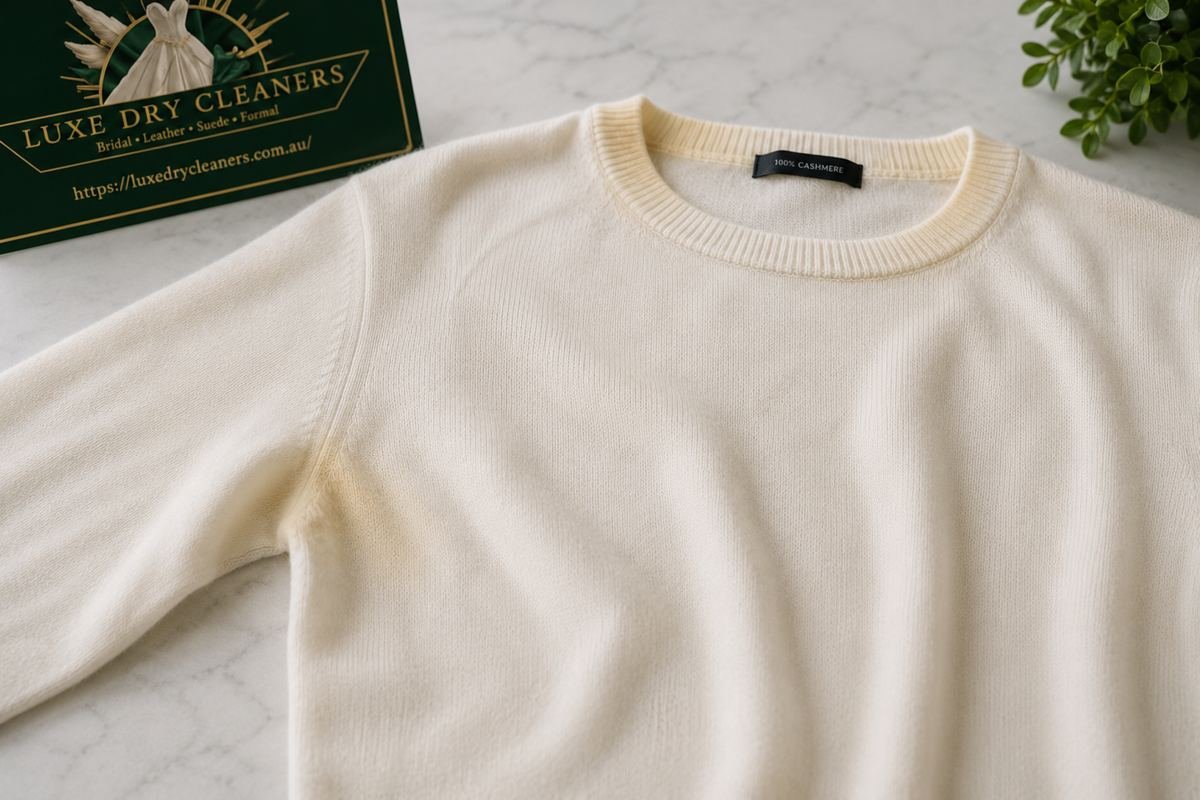
One of the most common disappointments in garment care is the winter jumper that goes into storage looking perfectly clean. Then it comes out the following autumn with knitwear yellowing at the collar and underarms. Sometimes a faint set-in stain appears too, one that was invisible when the jumper went away. The owner is usually baffled: it was clean when I put it away. In truth, it was not — not really. It simply carried its soiling in a form the eye could not see. A collection before storage is the simplest way to close that gap.
The Jumper That Looked Fine — Until Next Year
This is one of the most important and least understood ideas in caring for fine clothing. ‘Looks clean’ and ‘is clean’ are not the same thing. In fact, the gap between them is exactly where stored knitwear quietly deteriorates over the warm months. As you pack away your winter woollens for spring, understanding invisible soiling matters. It is what separates a wardrobe that stays immaculate from one that steadily degrades.
Most people learn this lesson the expensive way. Once stains have marked a beloved pale cashmere beyond rescue, the owner never stores a jumper dirty again. The point of understanding it now is to skip that costly first lesson entirely.
What’s on Your Clothes: The Causes of Knitwear Yellowing
Every time you wear a garment against your skin, it collects a layer of body soil that is largely invisible:
- Perspiration and the salts it leaves behind.
- Natural skin oils and dead skin cells.
- Deodorant and antiperspirant, whose aluminium compounds react with perspiration to cause stubborn yellow underarm staining that stiffens as it sets.
- Moisturiser, fragrance, hair products and sunscreen.
None of this shows up as an obvious mark on the day. That is particularly true of textured knitwear, which hides soiling far better than smooth fabric. The problem is what these residues do over time. Body oils and many cosmetic products oxidise as they age, and oxidation turns them yellow or brown. Months later, that oxidised oil appears on a pale jumper as knitwear yellowing at the collar, cuffs and underarms.
Perfume and fragrance also deserve a special mention. The oils and alcohols in fragrance can leave residue that discolours delicate fabrics. Spraying perfume directly onto knitwear, rather than onto skin before dressing, is a frequent cause of faint stains that only emerge with time.
Sunscreen is the modern addition to this list, and in a climate like Sydney’s, people wear it most of the year. Many sunscreens contain ingredients that oxidise and leave stubborn orange or brown discolouration on collars and necklines. Because people apply it to the skin rather than the garment, they rarely connect the mark to the cause. On pale knits and blouses, it is one of the most frustrating stains of all. Like the rest, it also sets harder the longer it stays.
Why Time Turns Invisible Soil Into Knitwear Yellowing
End-of-winter cleaning matters so much because time is the enemy. A fresh body-oil residue is relatively easy for a professional to remove. Left in the fabric through a warm spring and summer, however, the same residue oxidises, sets and bonds with the fibres. Eventually it becomes a genuine stain rather than surface soiling. Heat and time accelerate this, and a garment box in a warm Sydney wardrobe provides plenty of both.
This is why a jumper stored dirty for six months can develop staining that later cleaning may never fully lift. The window to remove invisible soiling cleanly is before storage, not after. Once knitwear yellowing has set into a pale natural fibre, even skilled treatment may only improve it. Worse, aggressive attempts to force it out risk damaging the fabric.
There is also a second consequence, which our piece on moth-proofing explores. These same oils and residues are precisely what attracts clothes moths and feeds their larvae. Invisible soiling therefore does double damage in storage: it stains the garment and invites the insects most likely to eat it. Both problems have the same simple solution.
Why Professional Cleaning Reaches What Home Washing Can’t
Home washing struggles with this problem for a few reasons. First, a machine wash can felt, stretch or pill delicate knitwear, so people wash it timidly or not at all. Second, hand-washing gentle enough to protect the fibre often fails to shift oxidised oils and set antiperspirant residue. Finally, a cautious home wash treats the collar, cuffs and underarms least effectively, yet these areas need the most attention.
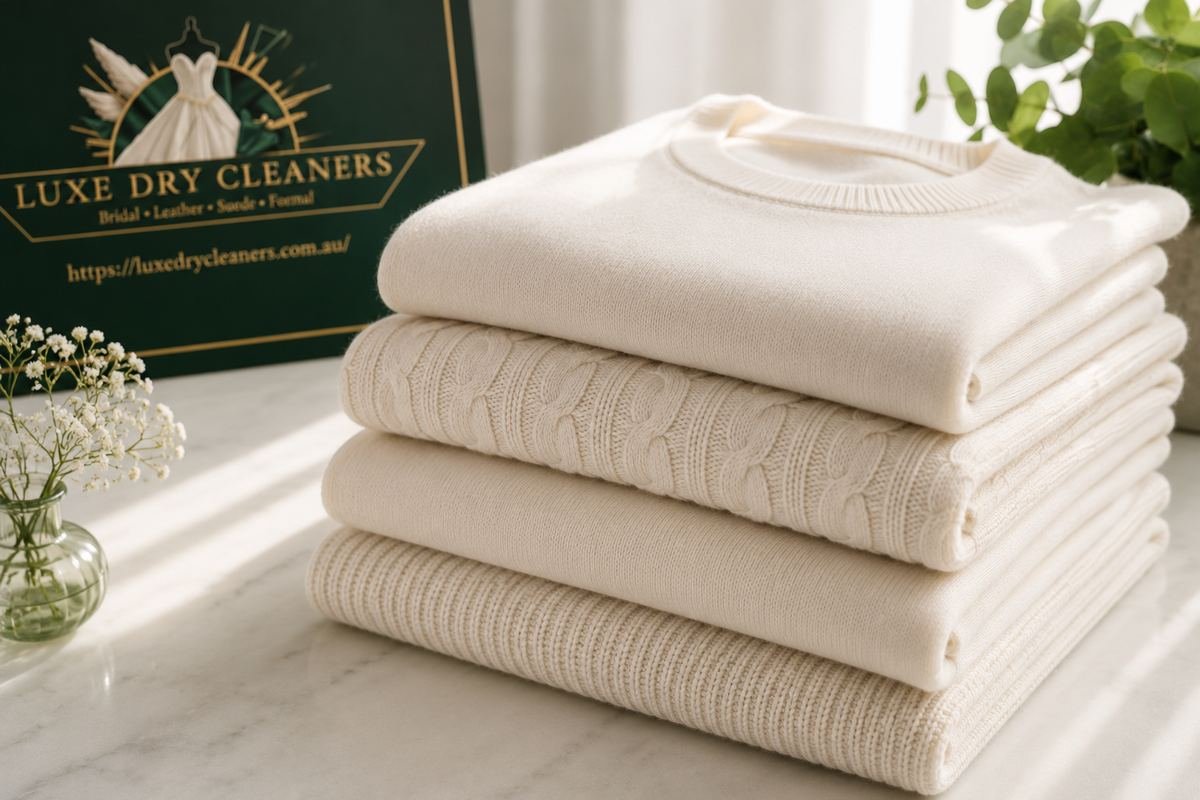
In contrast, professional cleaning focuses on exactly these residues. Specialist processes and pre-treatments target oil-based and protein-based soiling that water alone leaves behind. They also use methods calibrated to the fibre, so they suit even fine cashmere. As a result, the garment is clean in substance, not just in appearance. It no longer carries the invisible load that would otherwise oxidise into knitwear yellowing in storage.
At Luxe, we assess and treat knitwear according to its fibre and construction. We pay particular attention to the high-soiling areas, so pieces go into storage genuinely clean. There is real value, too, in a specialist seeing a garment before a mark becomes obvious. An experienced eye can spot the early signs of an oxidising residue and treat it while removal is far easier.
A Simple Habit Against Knitwear Yellowing
The takeaway is straightforward. Do not judge whether a winter garment needs cleaning by whether it looks dirty. Instead, ask whether you have worn it against the skin. If you have, it carries invisible soil, so have it cleaned before you store it for spring and summer. Building this into your seasonal wardrobe swap is one of the highest-value habits in caring for fine clothing.
A few small day-to-day habits also help. Apply fragrance and antiperspirant before dressing, and let them dry fully before pulling on a jumper. Never spray perfume onto knitwear directly. Give a knit a day’s rest between wears, too, so it can air. These habits reduce the load in the first place. However, they do not replace the end-of-season clean, which remains the most effective way to prevent knitwear yellowing. For everyday fibre care between cleans, the Woolmark care guidelines are a useful reference.
Of course, the same principle applies well beyond knitwear. Your silk blouses, fine trousers, tailored dresses and anything else worn against the skin carry the same invisible load. But knitwear is where the lesson bites hardest. Pale, delicate natural fibres show oxidised soiling most clearly and forgive it least. Once you get the habit right with your knits, it naturally extends to the rest of the wardrobe.
Frequently Asked Questions
Why did my jumper come out of storage with yellow marks?
Invisible body oils, antiperspirant and fragrance residues oxidise over warm months in storage. They then emerge as yellow staining at the collar, cuffs and underarms. The garment went in carrying soil the eye couldn’t see.
Can set-in yellowing be removed from cashmere or wool?
Sometimes improved, rarely erased. Once oxidised staining has bonded with a pale natural fibre, even skilled treatment has limits. That is why cleaning before storage matters far more than treatment after.
Does knitwear worn only once or twice need cleaning before storage?
Yes. A single wear against the skin deposits enough oil and perspiration to oxidise into marks — and to attract moths. Judge by wear, not by appearance.
Pale knits forgive nothing and forget less. Before your cashmere goes into its summer sleep, let us collect it. We offer pickup and delivery for a flat $25 across Sydney CBD, the Eastern Suburbs and the Lower North Shore. We also assess every piece and clean it to its fibre. Standard turnaround is 3–5 days, with Quick and Rush options available. Book a pickup online or call 0485 511 744.