
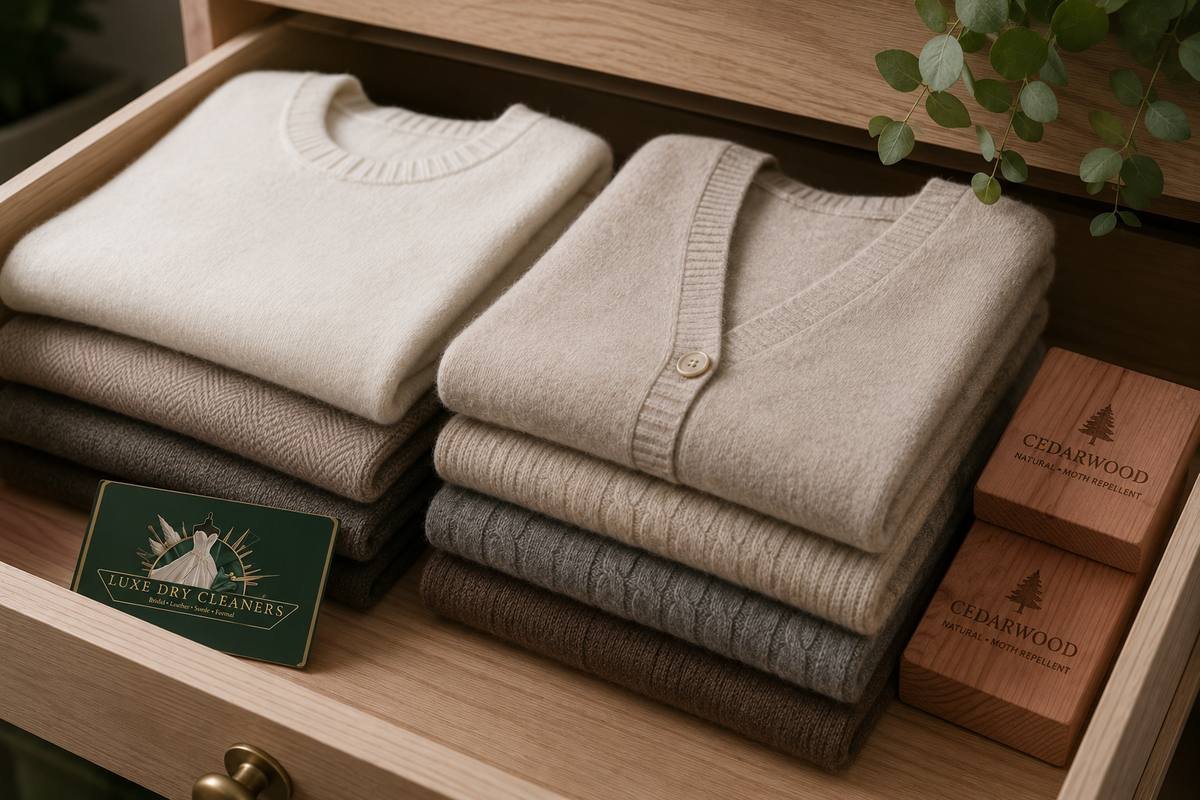
There is a particular kind of dismay that comes with pulling a favourite cashmere jumper from storage in autumn and finding a scatter of small holes across the front. By then the culprit is long gone. The damage was done months earlier, in the warmth of spring and summer, by an insect most people never actually see: the clothes moth. For anyone who has invested in fine knitwear, understanding the moth is the difference between a wardrobe that lasts decades and one that is quietly eaten away each year — and a clean before storage is worth more than any sachet or cedar block — real moth-proofing starts with the clean, not the drawer.
The Quiet Damage That Happens While You’re Not Looking
Sydney’s mild climate suits clothes moths very well. They do not need cold to survive; they thrive in the warm, undisturbed, slightly humid conditions of a closed wardrobe over the warmer months — exactly when your winter woollens are packed away and forgotten. That is why end-of-winter, as you store your knits, is the single most important moment for moth-proofing.
The insidious thing about moth damage is its timing. You do all the right things in autumn — fold everything neatly, close the drawer — and the destruction happens invisibly over the months you are not looking, in the pieces you are not wearing. By the time you next reach for that jumper, the season of damage is already over. This is a problem you prevent in advance or not at all, which is why the storage moment matters so much.
It’s Not the Moths — It’s Their Larvae
The adult clothes moth you occasionally glimpse fluttering out of a cupboard does not actually eat fabric. It has no interest in your jumpers except as a place to lay eggs. The damage is done by the larvae that hatch from those eggs, which feed on the protein keratin found in animal fibres — wool, cashmere, alpaca, silk, angora, mohair and fur. Cotton and synthetics are largely safe; it is precisely the finest, most expensive natural fibres that are most at risk.
Crucially, larvae are drawn to soiled fabric. They feed most enthusiastically where there are body oils, perspiration, food traces and skin cells, because these provide extra nutrients and moisture. This is the key insight that changes how you should store knitwear: a jumper that looks clean but was worn a few times before being put away is far more attractive to moths than a freshly cleaned one. The invisible residue of wear is a dinner invitation.
This is also why moth damage often appears in patches around collars, cuffs and underarms — the areas that carry the most body soiling. The moth is not choosing at random; it is following the food. Understanding this turns moth-proofing from guesswork into something you can actually control.
The Golden Rule: Never Store Woollens Dirty
Everything about moth-proofing flows from one principle: clean garments before you store them. Professional cleaning removes the oils, perspiration and food traces that attract and nourish larvae, and it eliminates any eggs already present in the fabric before they can hatch in storage. A cabinet of clean cashmere is a far less appealing target than one holding lightly worn knits.
This is why the end-of-season clean is not merely about appearance. A jumper can look perfectly wearable and still be carrying enough invisible residue to feed a generation of larvae over summer. Cleaning it before storage is the most effective single thing you can do — more effective than any repellent — to protect it.
At Luxe, we treat winter knitwear with methods matched to each fibre, so that cashmere, merino, alpaca and blends are cleaned without felting, stretching or losing their softness. Garments come back genuinely clean to the core and ready to be packed away with confidence.
It is worth dispelling a common piece of wishful thinking: that a garment worn only once or twice is ‘clean enough’ to store. From a moth’s perspective, once is plenty. A single wear deposits enough skin oil and perspiration at the collar and underarms to make a jumper attractive, and it only takes one female moth finding that jumper to lay a clutch of eggs. The safe assumption is that anything worn against the skin, however briefly, should be cleaned before it is sealed away for the warm months.
Moth-Proofing in Layers: Smart Storage That Keeps Moths Out
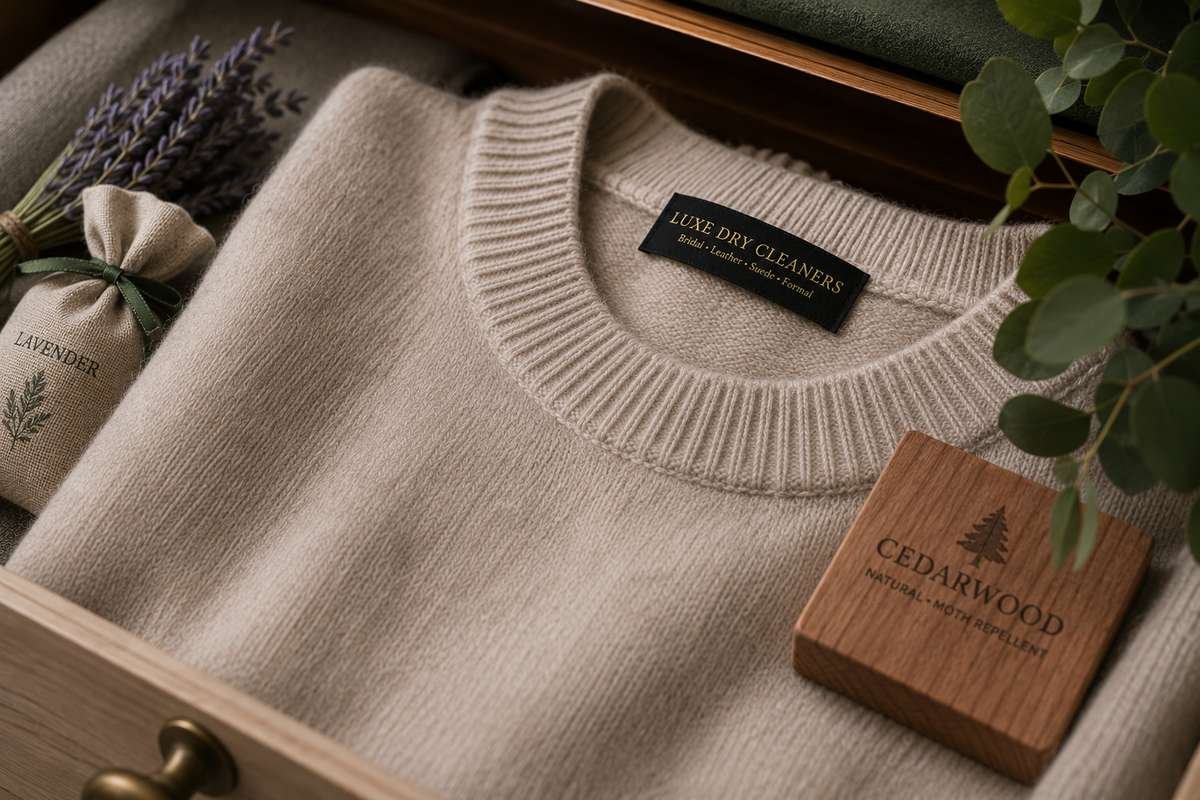
Clean garments deserve clean, sealed storage. Fold heavier knits rather than hanging them, which prevents them stretching out of shape, and store them in breathable containers or bags that keep moths out while letting fibres breathe. Airtight boxes and breathable cotton garment bags both work; loose piles on an open shelf do not.
Natural deterrents help as a second line of defence. Cedar and lavender are both disliked by moths — cedar blocks and rings, or lavender sachets, tucked among folded knits create an environment moths prefer to avoid. Cedar loses its potency over time and needs a light sand or a few drops of cedar oil to refresh it. These are deterrents, not miracle cures; they work best in combination with clean garments and sealed storage, not as a substitute for cleaning.
One useful habit is to think in layers of defence rather than a single fix:
- Clean garments remove the food source.
- Sealed, breathable storage removes access.
- Cedar and lavender make the environment unappealing.
- An aired, occasionally disturbed wardrobe — vacuumed corners, wiped shelves — removes the calm the larvae need.
No single measure is foolproof, but together they make your woollens a target barely worth a moth’s trouble — and that combined discipline, applied every year at storage time, is what keeps a fine-knit collection intact.
If You’ve Already Seen the Signs
If you have spotted small holes, fine webbing, gritty residue that looks like sand, or the moths themselves, treat it as an active problem rather than a one-off. Isolate affected garments, have them professionally cleaned promptly, and thoroughly clean the storage space before returning anything to it. Prompt cleaning both removes larvae and eggs from the garments and stops the cycle from spreading to neighbouring pieces.
It also pays to check the pieces you are not actively worried about. Moths favour the dark, quiet corners — the jumper at the bottom of the pile, the coat pushed to the end of the rail, the scarf in the back of the drawer. An infestation found early in one garment is a warning to inspect and, if in doubt, clean the whole woollen wardrobe before storing it, rather than sealing the problem in alongside your best pieces.
Fine knitwear is one of the most rewarding categories of clothing to own and one of the most vulnerable to neglect. A little discipline at the change of season — clean, then store properly — keeps a collection of cashmere and wool looking immaculate for many winters to come. If the scale of an infestation is at all unclear, err on the side of caution and treat the whole affected wardrobe rather than one or two obvious pieces; when in doubt, our specialists are happy to advise on whether a garment can be saved and how best to protect the rest of the collection.
Frequently Asked Questions
What actually causes moth holes in stored jumpers?
Not the adult moths but their larvae, which feed on keratin in wool, cashmere, alpaca and silk — and feed most where body oils and skin cells remain. Soiled storage is the invitation.
Do cedar and lavender actually stop clothes moths?
They help as deterrents, but they are a second line of defence, not a cure. The decisive step is storing only professionally cleaned garments in sealed, breathable storage.
I’ve found holes — what should I do?
Isolate the affected pieces, have them and anything stored nearby professionally cleaned promptly, and vacuum and wipe the storage space before anything goes back in. When the scale is unclear, treat the whole drawer rather than one jumper.
One female moth finding one lightly worn jumper is all it takes. From Woollahra and Paddington to Bondi Junction and across 58 Sydney suburbs, we collect winter knitwear from your door and return every piece cleaned to storage standard, fibre by fibre. Standard turnaround is 3–5 days, with express options on request. Book a pickup online or call 0485 511 744.