
A wedding dress often looks pristine at the end of the night, but the fabric tells a different story. Champagne splashes, perspiration, makeup, hem dust and oils from handling can all remain, even when no stain shows. You may wear the gown for a single day, yet it absorbs more than most people realise. Much of it only shows months later, so wedding dress preservation should start soon after the event.
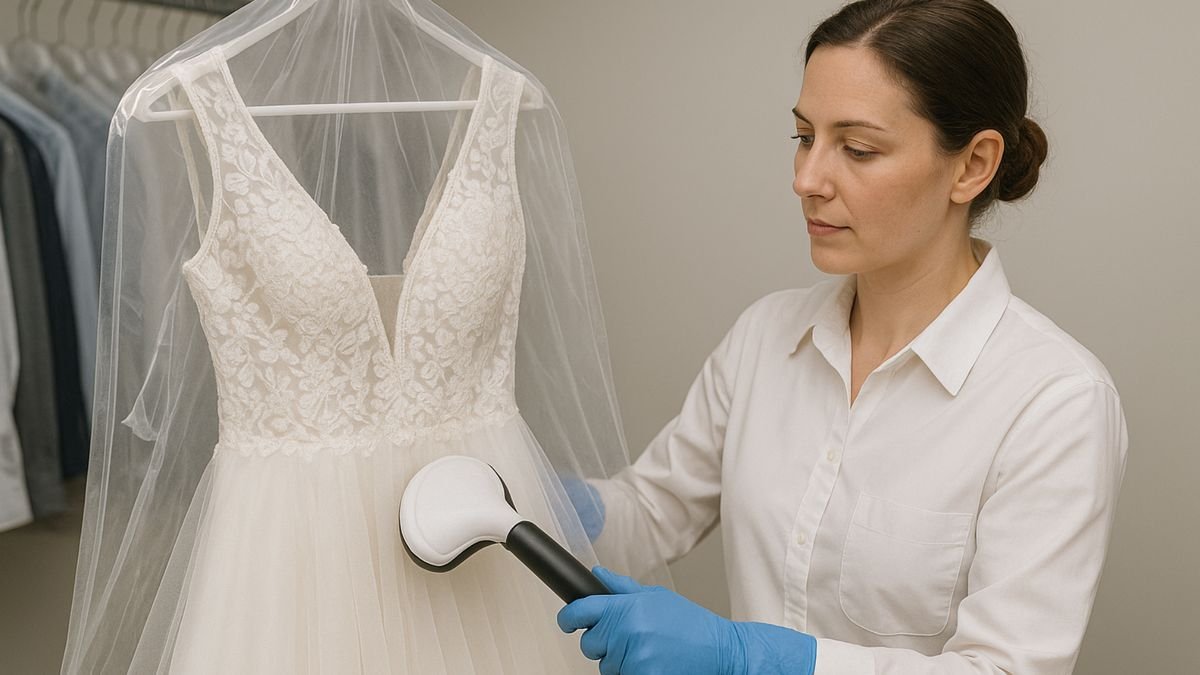
Proper wedding dress preservation in Sydney begins with prompt specialist cleaning. The earlier we treat the gown, the better the chance of protecting delicate fabrics, embellishments and colour for long-term storage. At Luxe, we built our wedding dress cleaning service around bridal construction. As a result, we assess and treat each gown according to its fabric and finish, not a generic process. You can also book a door-to-door pickup for a flat $25.
Why timing matters for wedding dress preservation
The biggest risk is waiting too long. Marks that seem invisible at first can oxidise over time. They then turn yellow or darker as they settle into silk, satin, lace and tulle. Hemline dirt can also set more deeply than expected once the dress sits in a wardrobe or garment bag. For example, a gown that looks clean on the Monday after the wedding can slowly discolour over the following season. By then, the residue has had weeks or months to bond with the fibre.
Immediate post-event attention helps address:
- champagne and food splashes
- perspiration and body oils
- makeup and fragrance transfer
- dust and grime along the train and hem
- handling marks on the bodice, straps or sleeves
Wedding dress preservation is not only about storing the dress beautifully. In fact, it begins with removing residue before storage even starts. A gown that goes into archival storage carrying sugars, oils and perspiration quietly works against itself while it waits.
Delicate fabrics and embellishments need specialist handling
Wedding gowns rarely use a single, uncomplicated material. They often combine structured bodices, layered skirts, lace appliqué, beadwork, embroidery, boning and specialty trims. Each of these elements can react differently to cleaning. For this reason, a gown needs more care than an ordinary garment.
That complexity means the cleaning method has to match the gown. A one-size-fits-all approach, by contrast, risks damaging embellishments, affecting the shape or stressing delicate sections. For heavily beaded or embellished pieces, our couture finishing service brings hand-detailed attention. As a result, intricate work stays protected rather than flattened or loosened.
Wedding dress preservation: why home spot cleaning is risky
It is understandable to want to treat a visible mark quickly at home. However, wedding dresses do not respond well to casual stain removal. The wrong product can disturb colour, weaken delicate fibres or leave water marks more noticeable than the original stain. Even plain water can leave a ring that is harder to resolve than the original mark.
Professional assessment is the safer option, especially for silk, fine lace, beading, multiple fabric layers or designer construction. A specialist can identify the fibre and test discreetly. Then they choose a method suited to the exact piece, instead of guessing under pressure. The Product Safety Australia guide to care labels also explains what each care symbol means.
Wedding dress preservation is about future condition, not just appearance
A gown can appear clean today and still deteriorate during storage if invisible residue remains. Proper preservation helps protect the garment, so you can keep it as a meaningful piece. Breathable, acid-free storage matters too, but it only works when the gown is genuinely clean at a fibre level.
This applies whether you plan sentimental storage, family preservation or simply keeping the gown in the best possible condition. When you clean and store a dress correctly, you can revisit it years later. You might bring it out for an anniversary, a christening or a daughter’s own wedding.
Frequently asked questions
How soon after the wedding should a dress be cleaned?
As soon as practical. Earlier specialist attention reduces the risk of oxidation, yellowing and set-in marks. If travel or a honeymoon delays things, arranging a pickup for the week you return is a sensible next step.
Can delicate embellishments be cleaned safely?
Yes, with the correct specialist assessment and treatment. The method should always reflect the construction of the gown. Heavily embellished pieces also benefit from hand finishing rather than a standard cycle.
Is preservation still worth doing if the dress looks clean?
Yes. Many of the most damaging residues are invisible at first and become more obvious only after time in storage.