Before a luxury garment is ever cleaned, the most important work has already begun. Specialist dry cleaners understand that assessment determines whether a garment is preserved or compromised.
What Makes a Garment “High-Risk”?
For high-risk garments — those made from delicate fabrics, complex construction, or luxury materials — assessment is not optional. It is the foundation of professional luxury garment care.
At Luxe Dry Cleaners Sydney, every high-risk garment is treated as a unique case, never as part of a batch. This meticulous approach protects not only the garment itself, but also the investment, craftsmanship, and memories attached to it.
A garment is considered high-risk when incorrect cleaning could cause irreversible damage. Risk may come from a single factor or a combination of several, including:
Silk, cashmere, velvet, leather, lace, couture garments, beaded eveningwear, and wedding gowns all require specialist evaluation. Even garments that appear simple on the surface may conceal vulnerabilities beneath linings or within internal structure.
High-risk does not necessarily mean fragile — it means unforgiving. These garments allow little to no margin for error.
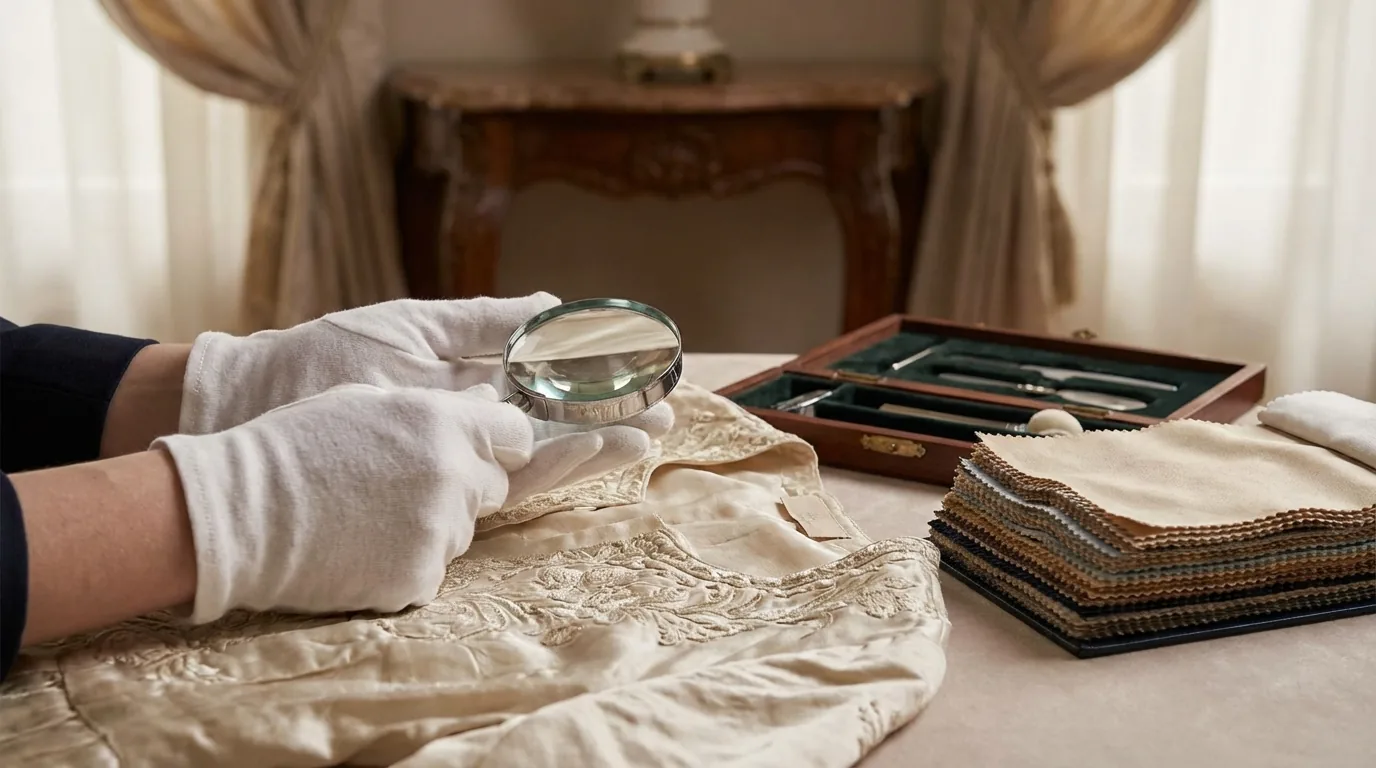
Step One: Fabric Identification Beyond the Care Label
Care labels provide guidance, but they are never definitive. Luxury garments often use blended fibres, specialty finishes, or hand-treated textiles that behave differently from standard materials.
Specialist dry cleaners assess the garment directly, evaluating:
This assessment determines whether a garment is suitable for full cleaning, partial cleaning, hand treatment, or non-immersive care. In some cases, traditional dry cleaning is not the safest option at all.
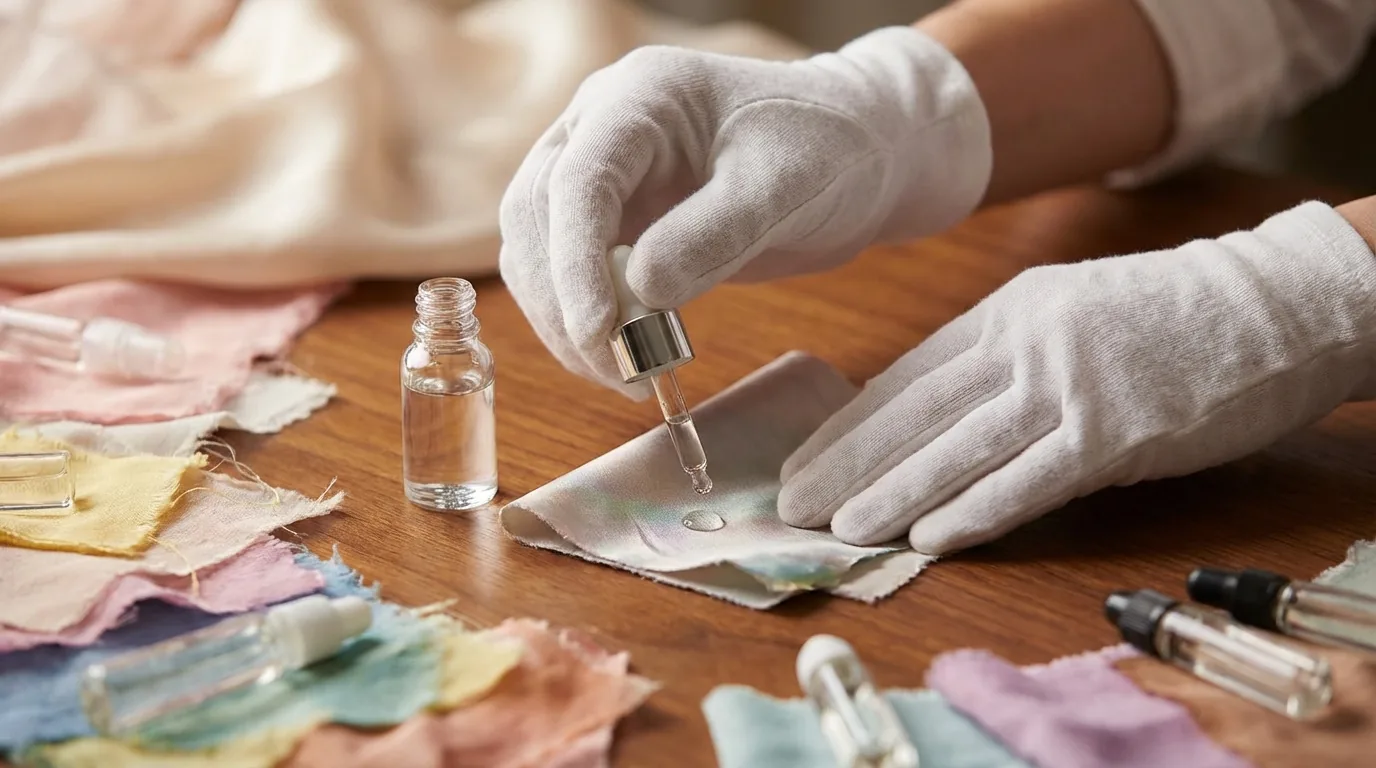
Step Two: Colour and Dye Stability Testing
Luxury fashion frequently relies on rich, saturated or layered dyes. While visually striking, these dyes can be unstable when exposed to moisture, solvents, agitation, or heat.
Specialists conduct discreet dye-stability tests in low-visibility areas to assess how colour will behave during cleaning. This prevents:
Without dye testing, even a single cleaning cycle can permanently alter a garment’s appearance. Assessment allows methods to be adjusted before damage occurs.
Step Three: Construction and Internal Structure Review
High-end garments are engineered with precision. Beneath the outer fabric may be internal elements that define fit, shape, and drape, including:
Improper cleaning can weaken adhesives, distort canvassing, or collapse internal architecture. Specialists examine how cleaning processes may affect these features before proceeding — a step especially critical for tailored suits, formal gowns, bridal wear, and designer outerwear.
Step Four: Trims, Embellishments, and Hardware Assessment
Buttons, zippers, beads, sequins, embroidery, and decorative trims introduce additional risk. Many embellishments are glued rather than stitched, making them vulnerable to solvents, heat, and agitation.
Each trim is assessed for:
Depending on the findings, trims may be protected, removed, cleaned separately, or the garment may require an alternative treatment method altogether. For heavily embellished garments, decisions are intentionally conservative — preservation comes first.
A piece worth protecting deserves a specialist.
Our Sydney couture and designer team handle it end-to-end — inspection, individual cleaning, hand-finishing, and door-to-door delivery.
Step Five: Wear Patterns and Existing Damage
A garment’s history matters. Previous wear, alterations, and prior cleaning attempts all influence how it will respond to treatment.
Specialists look for:
Identifying these issues allows cleaners to avoid worsening existing damage and to tailor the cleaning approach accordingly.
Decision-Making: Clean, Treat, or Preserve
Once assessment is complete, specialists determine the safest course of action. This may include:
The objective is never to apply the strongest process — it is to use the least invasive method that achieves the best possible outcome.
Why Assessment Protects Garment Value
Assessment replaces guesswork with informed decision-making. It transforms garment care into a deliberate, controlled process rather than a routine service.
For luxury clients, this provides confidence — confidence that garments are handled with technical expertise, respect for craftsmanship, and an understanding of long-term value. This is especially important for heirloom pieces, designer investments, and garments worn for once-in-a-lifetime moments.
The Luxe Dry Cleaners Standard
At Luxe Dry Cleaners Sydney, assessment is never rushed. High-risk garments are evaluated individually, with cleaning methods chosen to prioritise preservation above all else.
This disciplined, specialist-led approach is why clients trust us with garments worn to milestone events, formal occasions, and personal celebrations. Our focus is not simply cleanliness, but longevity, structure, and enduring quality.
Book Your Pickup
Luxury Dry Cleaning, Collected From Your Door
Complimentary collection and delivery across Sydney CBD, the Eastern Suburbs (Double Bay, Woollahra, Paddington, Bondi, Bellevue Hill, Darling Point) and the Lower North Shore (Mosman, Neutral Bay, Cremorne, Kirribilli). Every piece inspected and hand-finished by specialists.
Prefer to talk first? Speak with a specialist ›
Frequently Asked Questions
Because assessment ensures the safest method is selected before cleaning begins.
No. Labels do not account for fabric blends, dye treatments, or construction details.
Specialists may recommend partial cleaning or preservation-focused care.
Yes, but it significantly reduces the risk of irreversible damage.
Yes. Beading, sequins, and embroidery require careful evaluation.
Yes. Specialists detect existing weaknesses that affect cleaning decisions.
Luxury clients, stylists, personal assistants, and anyone with high-value garments.
Luxe Dry Cleaners is Sydney’s couture and luxury garment care specialist, servicing the CBD, Eastern Suburbs, and Lower North Shore with complimentary door-to-door collection and hand-finished quality. Further reading on fabric care: Woolmark care guidelines.